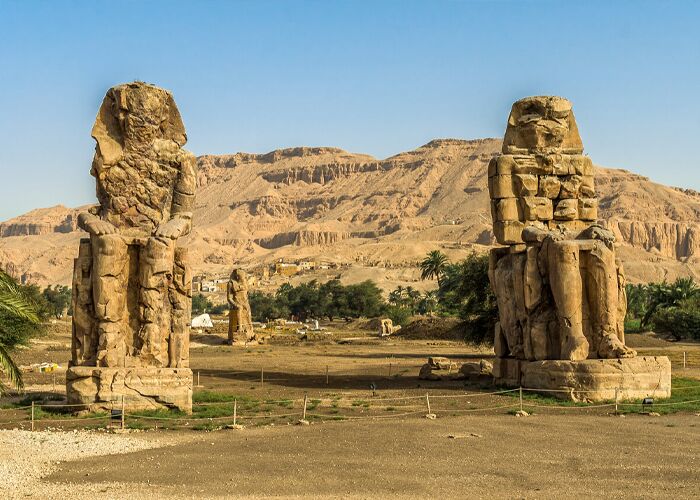
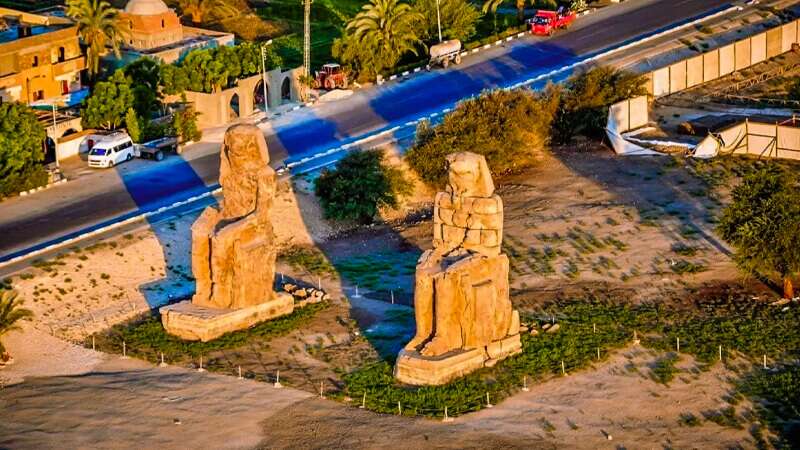
Colossi of Memnon, from the 18th Dynasty of ancient Egypt, are two giant ancient Egyptian statues of Pharaoh Amenhotep III (reigned 1386-1353 BCE). They show the king sitting above a seat of power topped with images of his mother, wife, the god Hapy, and other symbols and built with quartzite stones mined in el-Gabal el-Ahmar from the 14th century B.C. These statues stand watch over Amenhotep’s tomb. After being damaged by floods in Egypt, this vast form was finally abandoned and left in tombs.

Who is Memnon

Memnon was a hero at the time of the Trojan war. He was also the king of Ethiopia, and he led his soldiers across the continent of Africa and into Asia to defend the city that was under attack. Achilles was the one who ultimately put an end to his life. The two statues use the name “Memnonium” to refer to the whole of the Theban Necropolis, a name that has been used for more than 2,000 years.
Colossi of Memnon Facts

Where did the name “Colossi of Memnon” come from?

The Colossi of Memnon are most commonly referred to by their Roman name, the Temple of Memnon, despite the reality that their ancient Arabic name is Kom el-Hatan. Memnon, king of Ethiopia, was a respected figure in the Trojan War. He led his army over the oceans from Africa to Asia Minor, where they tried to support the protection of the besieged city that Achilles was challenging. Although, Achilles utterly defeated Memnon and his army.
Memnon, whose name means the steadfast or determined, was the son of Eos, known for being the goddess of dawn. Memnon’s name means smooth or firm. Many years after the construction of the Colossi, Memnon became connected with the structure due to the cry at dawn given by the northern statue, also referred to as the “Vocal Memnon.” Memnon’s status as the “Ruler of the West” spread.

Description of Colossi of Memnon
Colossi of Memnon Facts

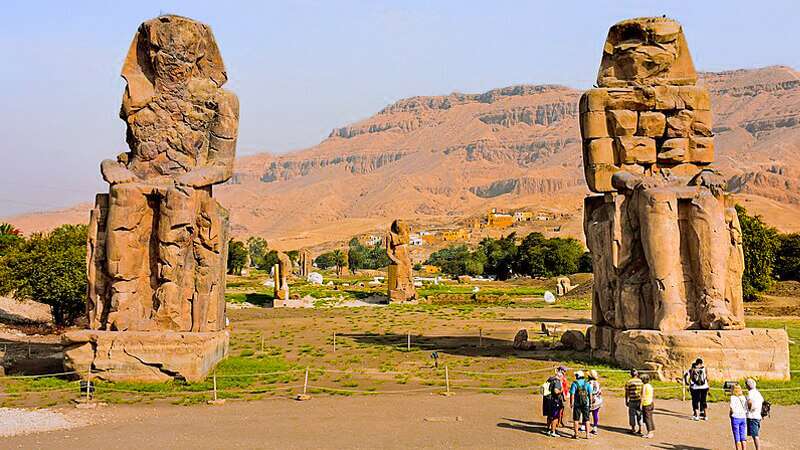
They stand at the height of 18 meters and weigh 720 tonnes each. Each one is hand-hewn from a specific piece of sandstone. They are statues of a pharaoh wearing the royal crown of the Nemes, followed by a divine cobra, and seated on a throne with such a second king. The king has his hands on his knees and is looking eastward towards the Nile River. His mother Mutemwiy and wife Tiye are shown as little figures on the front of the statues. Despite their silent decay, the two temples symbolize the unique Egyptian history and culture.

Where is the Colossi of Memnon located?

In the West Bank of Luxor, Egypt, there are gorgeous twin statues of Pharaoh Amenhotep III, as well as two more miniature sculptures carved by his feet; one of these statues symbolizes his wife, and the other reflects his mother. These statues stand graciously on the horizon of the magnificent Luxor distances.
The entrance to the mortuary temple of Amenhotep III is composed of statues, each of which is around sixty feet in height. They are known as the Colossi of Memnon because of an event with one of the statues following an earthquake, and this phenomenon gave rise to their famous nickname “.
The Colossi of Memnon are two giant statues made of quartzite sandstone. They were first built in the Theban Necropolis, located west of the Nile River in the modern city of Luxor. Archaeologists believe that the stone was quarried at El-Gabal el-Ahmar, located near modern Cairo, and transported 420 miles overland to the ancient city of Thebes.

When was the Colossi of Memnon built?

Pharaoh Amenhotep III ruled Egypt during the 18th Dynasty, usually from 1386 to 1349. The duration known as the Old Kingdom in Egypt included the kingdom of this Pharaoh and was marked by outstanding economic growth and significant cultural advancement. During the time of the Old Kingdom in Egypt, architectural work underwent a remarkable improvement, and the majority of the tombs that were built during this time are still functioning today.

During the 39 years that Amenhotep III served, many of these beautiful ancient sites were constructed, including the Colossi of Memnon, whose building was finished by 1350 BC. The Colossi of Memnon was built in front of the area formerly possessed by Amenhotep III’s temple (destroyed by an earthquake soon after its completion). The Amenhotep Temple was used as a tomb for Pharaoh Amenhotep III during his reign. During the time of the Roman Empire in ancient Egypt, the Colossi of Memnon was primarily damaged by an earthquake in 27 B.C., which led to their future repair by Roman emperors.

The legend of the “Vocal Memnon.”
Colossi of Memnon Facts

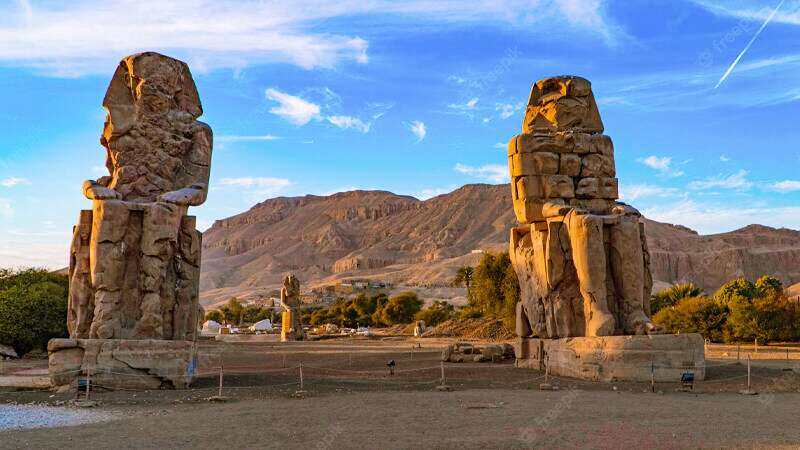
Due to an earthquake in 27 B.C., the northern Colossus was damaged entirely, collapsing from the waist up and breaking the bottom half. After this occurrence, the fragments of the north of Colossus that were left started to “sing” about an hour before sunrise, right when the sun began to rise.
The sound was believed to have been heard most usually between February and March; however, this may have been because this was when the most significant number of people visited the statues. When the Greek historian and geographer Strabo heard the sound during his visit to the Colossi of Memnon in 20 B.C., he described it as a “blow.” Strabo listened to the sound during his visit to the colossi.
According to an urban legend, those who took the time to listen to the strange sound made by the “Vocal Memnon” were said to be gifted with good fortune. This legend spread beyond Egypt’s borders, resulting in an increasing number of travelers from other countries, including several Roman emperors, who were looking for the blessing that the “Vocal Memnon” could provide.
Since it grew in popularity, many people in history and even in modern times have been supposed to solve the case of the “Vocal Memnon.” As such, to this day, no explanation has been known, and the “Vocal Memnon” is going to be one of the many mysteries surrounding the ancient Egyptian civilization.

What impact did the Colossi of Memnon play in ancient times, Protectors of the Gate?

The Colossi of Memnon was playing the functions of a temple guard just at Amenhotep III Temple. The Colossi of Memnon was built with the idea of protecting the temple of Pharaoh from evil. When a powerful earthquake fell on the temple, the Colossi of Memnon stood indifferent for thousands of years.

AMENHOTEP III AND THE  great Empire Of EGYPT

Pharaoh Amenhotep III lived in Egypt during the New Kingdom, which lasted from 1570 to 1069 B.C., and was defined by the increase of Egypt to a position of international power and luxury. So he was just twelve years old at the time, and his father lost him a successful empire. He wed Tiye, who became known as the “Great Royal Wife” after they were united in marriage. Even Amenhotep’s mother did not receive this title, which is a reflection of the queen of Pharaoh Amenhotep and his wife Tiye as married couples. He had a beautiful vision of the area, which can be seen via the 250 buildings, temples, steles, and statuaries that he completed during his great royal reign. This vision can be seen in the land. The palace at Malkata, which is situated on the western bank of the Nile in near Thebes, is an idea of one of his fantastic palaces. This magnificent location includes a huge number of rooms, as well as a festival hall, gardens, a large number of libraries, kitchens, conference rooms, and the Temple of Amun.
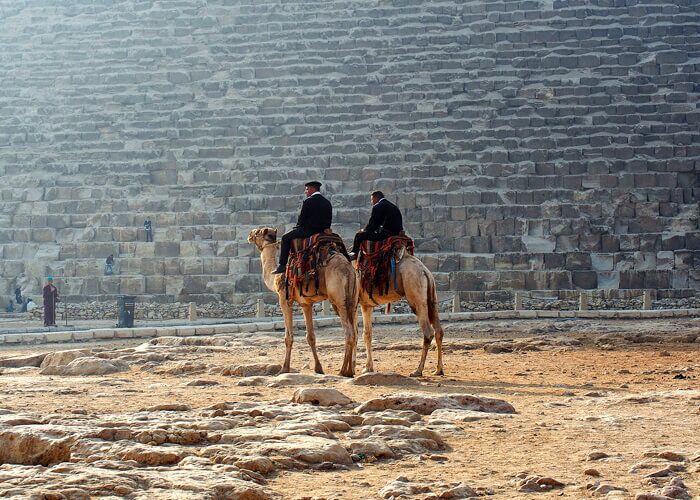
You’re excited about visiting Egypt, but you’re still unsure about the nation. No worries, you’ll find all the information you need in this post. Remember! Asking ahead of time might help you avoid unpleasant surprises and ensure that you are well-prepared for your journey.

Is Egypt a safe place to visit?
A new survey, “Global Law and Order 2019,” places Egypt ninth on a list of global safest nations. Yes, Egypt is undoubtedly a secure place.

In Egypt, which are the greatest spots to go on vacation?
Your options are almost unlimited. Aswan, Luxor, Abu Simbel and St. Catherine are all must-sees, as are the white deserts of Aswan, Luxor, and Luxor as well as Sharm El Sheikh, Dahab, Siwa, Cairo, and Alexandria.

In Egypt, what am I left with no options?
With that in mind, here are a few suggestions for you:

Avoid going on trips without a guide and/or a driver who is knowledgeable about the area.
Avoid nighttime driving because of the practise of many drivers of not using their headlights..
Don’t talk about personal matters in public.
Be respectful to religious institutions by dressing appropriately and being silent.
Keep politics and religion out of the conversation.
There is no need to take any corals from the Red Sea because even the tiniest scrape might cause harm.
Without authorization from the occupants and never photographing the military or government structures is prohibited (you will recognise them for the guards placed in front of them).
Don’t go to any places that aren’t approved by both travel firms and the Traveling Safe website (eg North Sinai, desert on the border with Libya).
In particular, avoid fresh veggies since they may have been washed in polluted water and may not be adequately clean.
The Nile is a fascinating place to visit, but it’s best to stay away from it if you’re concerned about contracting sickness or catching parasites (better avoid).
Take the appropriate vaccinations and get travel insurance before you go.
Keep a copy of your passport handy at all times.
Keep a little amount of money with you at all times (still not all businesses have card payments).

Where can I get the shots I need for Egypt?
People in the United States are often infected with hepatitis A, B, and C. After consulting with a doctor, immunisation against hepatitis A and B, tetanus, and typhoid fever is suggested. Safe travels from this place).

Are the pyramids accessible to me?
When a special ticket is purchased, the answer is undoubtedly yes.

Do the pyramids have an admission fee?
200 EGP (11.20 Euros), the 400 EGP (22.24 Euros) for Khufu, and 100 EGP for Khafre and Menkaure are the entry fees for the pyramid area (5,60 Euro)

How much do Egyptians typically tip?
If you want to show your appreciation for the service provided during your trip to Egypt, be sure to tip your guide, driver, servants and waiters. Tipping is widespread in Egypt, while it’s not necessary. When paying for the trip, it’s a good idea to have some Egyptian pounds on hand.

These hypothetical recommendations are summarised in the following table:

Outside of restaurants and public restrooms 5 EGP Driver 5 USD per day 10 USD per day tour guide
Servicing your suitcase Pictures with Bedouins, locals, and camels cost between $1 and $3 per photo A single American dollar
crew member’s salary: $30
Any help that may be given is much appreciated. In the range of 5 to 20 Egyptian Pounds (around 10 percent of the total)

How much alcohol can I have in Egypt?
The answer is yes, but only if you’re in a place where alcohol is offered or if you’re at home. Because a significant portion of the population is Coptic Christian, it is simple to locate establishments selling alcoholic beverages. Remember that you should never drink in public or on the street.

The question is whether or not it is possible to hold hands in Egypt.
As long as you keep your effusions private, there’s nothing stopping you from walking hand in hand.

In Egypt, can we use tap water to clean our teeth?
Direct contact with tap water should never be attempted. However, the use of more efficient water filters is growing in popularity.

Why can’t I have Egyptian food?
The Egyptian cuisine is one of Middle East’s finest and eating Egyptian food is one of the best things you can do during your trip to Egypt.

Check out our list of the best Egyptian cuisine and beverages.

Is the water in Egypt safe to drink?
It’s quite disappointing and demoralising. Illnesses affecting the gastrointestinal tract are common in Egypt. You should wash your food well and pay great attention to the cleanliness of the venues where meals are served. Drinking just mineral water and bottled beverages without ice is also suggested.

What should I wear to Egypt?
Unless you’re going to a house of worship, there are no limitations. For both men and women, loose-fitting attire (ideally with long sleeves and covering the ankles) is recommended while visiting places of worship; women should also wear a scarf to cover their hair.

Even while it is desirable to wear modest attire outside of public areas, it isn’t required to cover the whole garment.

What is the dress code for wearing leggings in Egypt?
Yes, Egyptian females often wear this kind of clothing, but they always make sure to layer a long blouse under their leggings.

Is it OK to go about Cairo in shorts?
You’re free to do so, but you’ll likely draw a lot of attention and it might be a nuisance to be continuously in the public spotlight.

When visiting Egypt, what should you buy?
Don’t be deceived by products manufactured in China. As a rule of thumb, choose for handcrafted items made of local materials wherever possible (always check with the traders that they are local products).

Try to purchase Egyptian cotton (among the best in the world). Don’t miss out on the opportunity to purchase spices, scented oil, essence and soap while you’re in Egypt! (olive oil is particularly good). Henna may also be purchased.

The Mediterranean and Middle Eastern culinary traditions combine to form the basis of typical Egyptian cuisine. Coriander, cumin, saffron, black pepper, and the ubiquitous shatta, an Egyptian name for “chilli,” are among the many spices often found in Egyptian cuisine. Don’t forget to indicate if you don’t like the flavour of pepper or if you’re allergic to it while ordering.

“The tastiest meal is the one that fills the tummy,” says an Egyptian saying. Arab, Turkish, European, and African influences may be seen in Egyptian food. However, the outcome is often referred to as modest.

There is a common belief among Egyptians that no meal is complete without meat, however the vegetarian mainstays of the impoverished – Fuul, Taymiyyah, and Koshari – are enjoyed by all social strata of Egyptians.

Fast-food chains and restaurants providing a variety of ethnic cuisines may be found in most major Egyptian cities, as well as traditional European eateries. And to top it all off, more and more restaurants are offering traditional food from the area.

In Egypt, dessert is never out of the question. You can taste the nation in this culinary arena, particularly when it comes to superb coffee to go along with all of your mouthwatering dishes. As soon as possible, ask your server for an apple-scented sheesha (water pipe). The long, drawn puff pastry not only calms the stomach, but it also helps relax your mind and reduce anxiety.

These are some of the most well-known dishes from the Egyptian mezze.
To begin, there is a selection of mezze. Tahina and all the sauces based on it, such as hummus (tahina + chickpea cream) and baba ghannog (tahina + eggplant cream previously baked in the oven) are included.

While you’re waiting for your meal to be prepared, munch on some of the fried, vinegar-and-garlic-seasoned torshy veggies and mekhallil aubergines.

Koshari is an Egyptian staple meal.
It’s impossible to explain Egyptian cuisine without mentioning the popular dishes like Koshari and Molokhiya, which are both prepared with pasta, grains, legumes (lentils or chickpeas), and a sauce made from vinegar and garlic.

Meat-based meals (kebab, Kofta, Hawawshy, Shish tawooq)
Kofta, a long, thin minced meatball, Hawawshy, a baked sandwich loaded with spicy minced meat, and Shish Tawooq, a chicken skewer grilled over coals, are some of the most prevalent meat dishes in the region. Among the mashwiyat options are kebab and kofta (grilled meat).

Chicken, beef, veal, and lamb are the most popular meats. Hamam, or pigeon (typically served stuffed with rice), and camel meat are two more popular meats in the region.

PORK IS RARE IN IRAQ, A GOOD MUSLIM COUNTRY (only in some areas with a Christian majority you can find it in some shops). It is common to see busy street booths offering kibda (liver) and mokh (brain) sandwiches to the Egyptian populace. Mumbar, a spicy rice-filled stomach, is another common meal.

You don’t have to be disheartened if you’re a vegan or vegetarian! There are several alternatives available to you as well. Small pans of vegetables (potatoes, aubergines, and carrots) roasted in a sauce are known as torlys.

In the winter, when you’re in the mood for something warm, the shorbat ‘ads, a lentil soup made with peeled red lentils, is particularly wonderful. There’s a vegetarian cuisine known as Mahshy, which combines veggies and vine leaves with a spicy rice.

Large amounts of fruit, nuts, and seeds may be found. These foods include sweet bananas and dates as well as mango and guava nectar as well as sesame and sunflower seeds, as well as pumpkin seeds and pumpkin seeds.

There are two desert fruits that are often found in the southern United States: the carob and a fruit known as Dom. It’s brittle and can only be eaten after being softened with a little water (remotely reminiscent of licorice).

There are a wide variety of Egyptian recipes, many of which are vegetarian-friendly, and they’re all wonderful.

Characteristics and staples of Egyptian cuisine
Feteer
You may have the Fateera for breakfast with fresh cheese or honey, or for lunch with meat or vegetables packed in it, in the south and rural regions.

“Aysh” (bread)
The Arabic word for bread, ‘aysh, means ‘life,’ and it is a staple in Egyptian cooking. Egyptians eat most of their meals with Aysh Baladi (pita-like unleavened bread), which is the bread of choice for most of their cuisines. The aysh is used as a spoon to consume sauces, the ful or wrapped in mashwiyat, and Tamiya, as well as the aysh itself.

Rice in white, which is served with the tastiest foods in Egypt, is another staple.

It’s either Samak or Fish
Fish (samak) from both sea and freshwater, usually roasted and sliced in half, is another notable feature of Samak cuisine. One of the most popular dishes is Tilapia del Nilo, or bolty.

Also popular in Egypt are dried and fermented fish such as herring and Feseekh. Although the fragrance isn’t very appealing, many people find it enticing!

Traditional Egyptian Beverages
Coffee and Tea
Drinking tea (shai) is a national activity in China, and those who don’t partake in the ritual are considered as weird and antisocial. You may either drink Shai as a teabag soaked in hot water or a powerful brew made from fresh local leaves, depending on your preference (the brew of choice is El Arosa).

Sukar shwaiya, ‘a little sugar’, is the only method to control the sweetness. Ask for min ghayr sukar if you don’t want any sugar. Shai paired with mint leaves, when available, is much more refreshing. Asking for milk outside of tourist hotels and restaurants might get you in a lot of trouble. Ask for b’laban at these locations.

Many people in the area don’t drink Turkish or Arabic coffee since it’s not commonly available; instead, they prefer instant coffee (also known as neskaf). Authentic Turkish-style brews are often served in tiny cups and consumed in a few of quick sips if you can locate them.

In the same way that you have to indicate how much sugar you want in your tea, you have to specify how much sugar you want in your ahwa mazboot.

Water
The notorious ‘Nile Piles’ is enough to spoil any traveler’s day in Egypt, so don’t even think of drinking from the tap. Even in the tiniest villages, low-cost bottled water is easily accessible. As a result, there is considerable disagreement about whether the water in Cairo is fit for human consumption. One Cairo expat tells us that “you can drink the water in Cairo,” despite the fact that it may not be safe for your health. ‘It simply doesn’t taste as good as it should.’

Other Beverage
The reddish-purple iced karkadai, a delightfully pleasant drink cooked up from hibiscus leaves, is a popular summertime drink in Ahwa, as is limoon (lemon juice) and zabaady (iced rose water) (yogurt beaten with cold water and salt).

Sahlab (semolina powder, milk, and chopped almonds) or yansoon (a medicinal aniseed drink) are popular wintertime beverages. Juice stalls are easily identified by the netting fruit and carrot bags that cover their exteriors, and they are a lifesaver on a scorching summer day.

Banana, guava, lemon, mango, bortuaan (orange), pomegranate, strawberry, and asab are the most common juices (asiir) (sugar cane).

Celebrations
When it comes to expressing gratitude for a child’s birth, a couple’s engagement or marriage, a bountiful harvest, or a big religious event, nothing makes Egyptians happier than a good party.

During Ramadan, the holy month of Ramadan, the most significant religious observances take place. An elaborate dinner cooked for morning is a special occasion that calls for a huge serving of soup and a variety of meats and vegetables. It is generally enjoyed in huge groups, either on the street or in specially-built enormous tents that have been made.

A fresh loaf of bread is usually accompanied by a gathering of loved ones. Ataf (syrup-dipped pancakes) and kahk bi loz (almond bracelets), a kind of biscuit, are traditional bridal fare. Boiling, an anise-flavored rice pudding, is traditionally served during childbirth. Consumption of sugary sweets is another important part of the Mullins experience.

Egyptian confections
Desserts like Konafa, Basbousa, Atayef, and Roz bil laban are particularly popular during Ramadan, the month of fasting (a kind of rice pudding).

Halawa, on the other hand, is a sesame-based spreadable cream popular in Egypt and the wider Middle East.

Egypt has an abundance of coffee shops where you can have some of the best red or green tea in the world, as well as Turkish coffee, hibiscus, and other fresh fruit juices.

During the sweltering summer months, many tiny stores provide freshly produced fruit juices and permutes, and these sugary treats are a lifesaver for those who have succumbed to the heat.

This drink, which is manufactured from cane sugar, is ideal for times when you’re feeling low on energy.

It’s possible to see the pyramids and the sphinx and eat a lot of excellent Egyptian cuisine if you plan one of the greatest Egyptian vacations!

What to Eat & Drink and When to Do It
When it comes to dining out, there is one unbreakable rule in Egypt: the greatest cuisine is always served in private residences. Make the most of the opportunity to eat at someone’s house if you get the chance.

But be warned: You will most likely end yourself overflowing with food, and no amount of arguing will stop it.

Only in Cairo and tourist destinations like Luxor, Sharm el-Sheikh, and Dahab would we advocate venturing out and experiencing various regional cuisines.

If you can’t find a place to eat in the area, explore about. The seafood restaurants in Alexandria are among of the finest in the area, so you should follow their example and eat there.

Even if you decide to eat out, you’ll notice that locals tend to dine later than in the West; it’s common to see customers arriving to a restaurant at 10 or more in the larger cities, especially in the summer. Dining in huge family gatherings, ordering enormous portions, puffing on cigarettes like chimneys, and taking their time is also a common occurrence.

Street Food in Egypt and Fast Food
Once you’ve had Egyptian street cuisine, you’ll never again be able to eat at a golden arches or with a colonel.

Fuul and ta’amiyya are two of the nation’s favourite snacks, and they’re even better when they’re presented and eaten fresh. Fava beans cooked with garlic, olive oil, lemon, salt, black pepper, and cumin are considered the national cuisine of Egypt. Fuul is an unpretentious peasant food. It’s a great sandwich filling when packed inside shammy.

Mash broad beans with spices and shape them into balls and deep-fry them to make Ta’amiyya (better known outside Cairo as felafel). A local version of both the Greek gyros sandwich and the Turkish döner kebab is shwarm, a sandwich made with strips of grilled lamb or chicken cooked on a hot plate with chopped tomatoes and other garnishes.

For kushari, which is a delicate blend of rice noodles, black lentil, and fried onions served with a tomato sauce that may be hot, seek for restaurants with enormous metal tureens in their windows.

Despite its resemblance to mom’s leftovers in a casserole, this Egyptian-inspired meal is affordable and satisfying, and genuinely Egyptian. Don’t forget to top your kushari with a generous quantity of the garlicky vinegar offered.

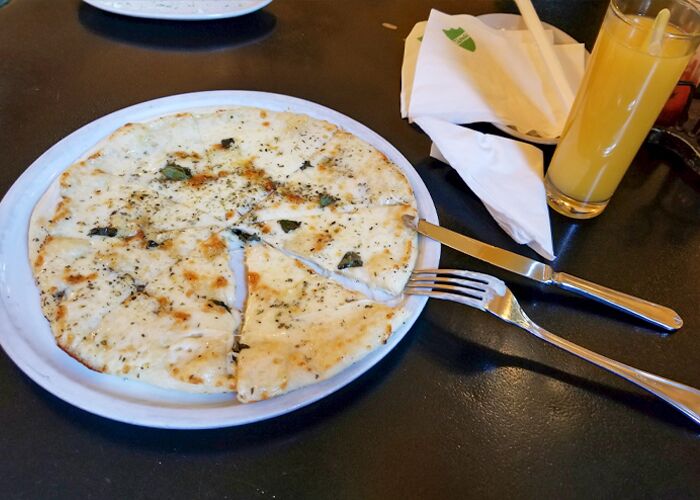
It’s a thin, flaky pastry foundation that makes fiteer a local variety of the pizza. Haloumi cheese or a variety of sugar-dusted fruit may be added to this dish.

Vendors’ street carts, as beautiful as they may be, should be avoided at all costs. Sandwiches, milk puddings, and more may be purchased from these vendors, however the food is frequently exposed to fumes, dust, and all kinds of bug life while sitting out in the sun all day.

Taking Children to Restaurants
Egyptians often go out as a family, and it’s not uncommon to see young people and teens enjoying late-night meals with their parents and other family members.

Most waiters are tolerant of youngsters and will go out of their way to make the little ones feel at home while they are with them (offerings of fried potato chips is a tried and true method). As a bonus, the region’s food is kid-friendly since it’s both simple and diverse.

Mezze dishes are a nice option for the younger guests, while kebabs (especially shish tawouq) and roast chicken are always a safe alternative, especially when served in fresh bread.

And, of course, the delectable snacks, such as fiteer, kushari, and ta’amiyya, are always a hit. Junior’s thirst may nearly always be quenched with a selection of fresh juices and soft beverages.

A few restaurants feature high chairs, but the majority don’t. Restaurants at hotels with Western-style dining rooms are more likely to provide children’s meals.

Behaviour & Usage
Every day, the Egyptians eat three meals as a rule. Kellogg’s has yet to penetrate the breakfast market, which consists mostly of bread and cheese, olives, or a fried egg at home, or a fuul sandwich on the go.

Lunch is the most important meal of the day and is often eaten between 2 and 4 p.m. when the father is home from work and the children are home from school.

Everything provided will be hot and plentiful, thanks to the ladies of the home (often mom) who have likely spent most of their day in the kitchen preparing it. Whatever’s remaining is frequently served up again later in the evening as dinner.

Tips & Tricks
If you’re having tea or eating anything on a rug or carpet, make sure to take your shoes off first. Keep your left hand out of communal dishes while you’re dining Bedouin-style since your left hand is used for, well, wiping yourself when there is no toilet paper around. Before blowing your nose at a restaurant, make a trip to the bathroom or outdoors.
During the holy month of Ramadan, it is imperative that you abstain from all of these vices when out and about (international hotels are an exception to this rule). Unless your host(ess) specifically instructs you differently, never eat at a table with people of a different sex.

Summers in Egypt are hot and the winters are moderate, according to the country’s mostly desert environment. If a consultant is contacted before organising a trip to Egypt, even the most sensitive to high temperatures will be able to enjoy the country, as long as the right time and measures are taken.

To the north, the Mediterranean Sea bathes Egypt; to the east, the Red Sea bathes Egypt; to the south, the Sahara desert embraces Egypt; and to the north, the Sinai Peninsula is traversed by a hilly region over 2000 metres high.

Before you pack solely bikinis and sundresses for your trip to Egypt, read this article, which will provide you with all the knowledge you need.

Most of Egypt’s land is dry and desert, and rainfall is rare. Egypt’s climate is marked by wide temperature swings and the fact that “there are – never have been – the mid-seasons.” There is no distinct spring or autumn, but the change from winter to summer is nearly imperceptible.

To visit Egypt, what is the ideal time of year to do so?

Between March and April and between October and November is the best time to visit the cities, avoiding the sweltering heat and the few winter showers, as well as for hiking in the highlands and spending days on the beach on both coastlines.

The best time to explore the desert is between November and February, when temperatures hover around 20 degrees Celsius, making for comfortable outings into the desert.

Additionally, the spring and fall are considered low season for Egyptian tourist, which means that they are the most affordable times to visit Egypt.

To be completely avoided:

This time of year is best avoided if you plan on visiting mountains that are covered in snow and ice; towns that are somewhat wet yet humid; and beaches that are approximately 18 degrees Fahrenheit. If you wish to travel between desert regions, you should avoid the month of August when temperatures reach their yearly maximum. In general, it is advisable to avoid the summer.

So, what exactly should you include in your carry-on?

Sunscreen (we suggest protection 50), insect repellent (such as DEET), and a hat or bandana are all essentials in the summer.
When it’s cold outside, it’s best to wear a combination of apparel, such as half-sleeve T-shirts, jeans or long pants, a sweater or light jacket for the evening, and don’t forget your swimwear.

In a nutshell, here’s how to choose the optimum time to schedule an Egypt vacation based on the location.
This quick and broad review of the Egyptian environment can help you pick the optimum time for your Egypt trips, stating that the decision of the period relies on the sort of vacation you wish to undertake.

On this day of the year:

There are two seasons that are great in Northern Egypt: spring and fall, when the heat isn’t quite as fierce.
Temperatures in South-Central Egypt are pleasant from November to February.
Eastern Egypt: the months of spring, when temperatures are still mild enough to enjoy outdoor activities.

In Egypt, the weather is pleasant when it’s chilly and rainy, which is logical if you consider that showers are very infrequent and temperatures are almost usually over 90 degrees.

Make sure you’re aware of any upcoming national holidays that might alter the hours of operation of various businesses and tourist sites in Egypt in 2021, and ask your Egypt Tour Packages travel agency if you have any queries.

Egypt’s celebrations

The Islamic calendar determines the majority of Egypt’s official holidays and festivals, however a number of Coptic Christian feasts are also extensively observed.

On Coptic Easter, for instance, Sham El-Nessim is observed. However, the origins of this celebration may be traced back to ancient Egypt, when it was celebrated in the early spring.

Because the Islamic calendar is based on the lunar cycle, the dates of Islamic holidays vary from year to year, from 10 to 11 days. Muslim holiday celebrations extend for 30 years because of this. A new day in Islam begins at sunset, which means that celebrations normally get underway at least a night in advance.

The holy month of Ramadan is observed in Egypt.

The holy month of Ramadan is the most significant one in Egypt. The festival commemorates the first section of the Koran’s revelation to Muhammad, and it is called after the Islamic calendar month of Rajab.

Most Muslims abstain from eating, drink, sex, and cigarettes throughout the month of Ramadan. In general, Ramadan is a period of grief. Among Muslims, there is a stronger emphasis on traditional values and abstinence.

Restaurants and stores may close for half a day during a fast and reopen when the fast ends at dark. There is a possibility that the tourist office would close an hour earlier than usual in order to accommodate the fasting of the workers.

Ramadan travel has many benefits. Fasting may be a gratifying experience if you get into the swing of it. As the sun sets, the streets come to life and people gather to drink and eat till the early hours of the morning. If you go along the street at night, you’re likely to be asked to join a group of fasters for dinner.

Although non-Muslims are not required to fast throughout Ramadan, they should be conscious of the fact that most of their neighbours are. Observing the fast in a knowledgeable and courteous manner involves abstaining from smoking and eating in public.

Note: During Ramadan, no Egypt Tour Packages services are disrupted due to fasting. In general, little tweaks are made to the way tours and excursions work over time.

At both Christmas and Easter, Egypt celebrates the Christian faith.

The Coptic New Year is celebrated on January 7th, and in recent years, Egyptians have begun bringing their Western Christmas decorations. Many more Santa Claus hats and Christmas lights may be seen in Egypt during this time of year compared to previous years.

Sham al-Nessim, which dates back to Pharaonic times, also falls on the same day as Coptic Easter. Seasonal festival: The term means “to smell the air” and is a celebration of spring (often in April). Guests may recognise a few of the customs on display.

It is customary to have a green picnic on Sham al-Nessim, as well as traditional delicacies like as pickled fish (feseekh) and fried bread (renga). Another seasonal tradition is to decorate eggs in a variety of hues.

After learning the ideal time to visit Egypt, are you ready to explore one of our Egypt vacation packages? The sooner you book, the better!

Any visitor entering Egypt is required to have an entrance visa stamped in their passport. The Egyptian Embassy sells this stamp all over the globe, as well as at Cairo Airport when you arrive.

Visas issued in accordance with the established custom
Another sort of visa is the tourist visa. At the airport, you may buy this visa for USD 25 per person from any bank. It is only valid for 30 days of admission into Egypt. As a result, if you leave Egypt and return within that time frame, you will be required to purchase a new one.

The Egyptian Embassy in your country issues this visa, which allows you to go to Egypt many times. This visa is valid for six months, during which time you may visit Egypt as many times as you choose.
Non-Egyptian citizens wishing to travel through Egypt on their way to another country may apply for a transit visa.

Visas are given out at no charge
In order to receive a free entrance visa, you only need to show up at the airport and present yourself. In your passport, you’ll find this stamp. In certain situations, a complimentary visa is provided.

Cruise ship passengers arriving in any of our seaports, such as Alexandria, the aforementioned port, or Safaga. This stamp serves as a visual cue that they’re just on a short journey. Since they will be departing Egypt on the same cruise ship, this stamp is good for the whole time they are in Egypt. If they arrive on a cruise ship and leave on a plane, they will need to apply for several visas from our embassy in their home country.
For visitors arriving on chartered flights to Sharm El Sheikh who want to remain in Sharm or South Sinai until their return home, this is a good option. To enter Cairo from Sharm El Sheikh, for example, they will need to get a visa at the airport upon arrival.
A visa is not required upon arrival for citizens of Malaysia. It’s good for 15 days after that.

Visa assistance is provided by Egypt Tour Packages.
Upon arrival in Egypt, a representative from our company will greet the visitor and help with the process of entering the country.

How can I get an entry visa to Egypt if I don’t reside in the country where I was born?
An Egyptian visa may be obtained at the Egyptian embassy or consulate in the country where the tourist is residing, or it can be purchased upon arrival in Cairo, Hurghada, or Luxor airports if the passenger has a resident permit. A visa must be obtained from the Egyptian Embassy or Consulate in the nation that issued your passport if they do not have a resident permit.

Are there any other Egyptian places I may visit if I have a visa for Sinai?
To travel outside of the Sinai Peninsula, travellers will need a new visa, since the Sinai visa only covers the Sinai Peninsula.

Is it possible to extend my tourist visa?
The Mogama building on Tahrir Square in Cairo’s downtown is where you must go to renew your visa.

Is it possible to combine a trip to Egypt with another destination?
We, of course, have a variety of packages that allow you to go to a variety of places.

What terminal will I land in if I arrive at Cairo International Airport?
Depending on whose airline you’re flying with, you may or may not be able to choose an arrival terminal. Terminal 3 is used by Western European and American airlines, whilst Terminal 1 is used by Egyptian, Arab, African, and Eastern European carriers.

Please take note that you may apply for an Egypt visa online at this website. visa2egypt.gov.eg