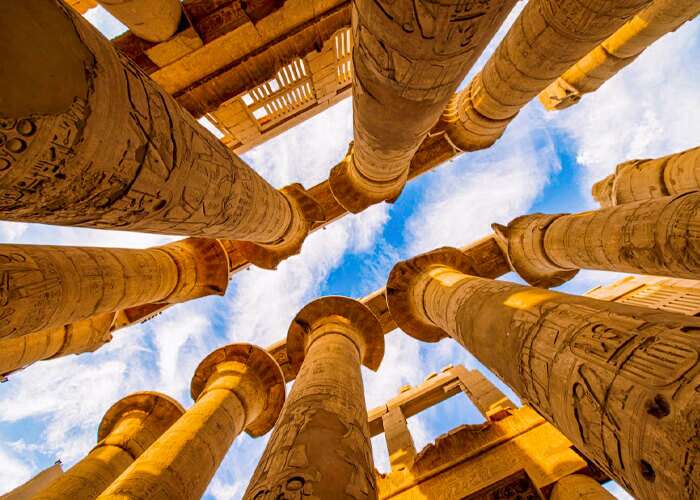
The history of Luxor Egypt

In the New King Kingdom, Luxor (Thebes) served as Egypt’s capital and was referred to be the “Glorious City” of the divinity Amon-Ra.

In ancient Egyptian mythology, Luxor  was referred to be Amon-“Glorious Ra’s City.”
After the 11th Dynasty, Luxor grew from a small town to a bustling city.

It was known for its high social status and elegance, as well as its role as a hub of knowledge, art, religious hierarchy, and political authority.

The city became a booming center of wealth, not just in Egypt, but across the world, in a short period of time.

During the 18th Dynasty and into the 20th Dynasty and beyond, Luxor played an important part in disbanding and

eradicating the Hyksos’ invading soldiers in Upper Egypt, establishing itself as a prominent center of power in terms of political, religious, and military authority.

Egyptian Christianity was centered there until the end of the Greek period.

There was Luxor Temple devoted to Amon, who was worshipped with his wife Mut and their son Khonsu (also known as the Moon God),

who was revered by them all.

It was only natural that when Luxor, Egypt’s principal focal point and metropolis, grew in importance and devotion, the God Amon was linked to the sun God Ra,

creating the new ‘King of Gods,’ Amon-Ra.. His colossal temple at Karnak, north of Thebes, was regarded as Egypt’s most important until the end of antiquity, and it still is today.

until the end of the Greek period, it was Egypt’s religious hub.

Luxor adored the God Amon, who was accompanied by his wife, Mut, and their son Khonsu, known as the God of the Moon.

Because Luxor became Egypt’s principal focus point and metropolis, the God Amon acquired importance and worship, and he was linked to Ra,

culminating in the formation of the new ‘King of Gods,’ Amon-Ra,

Karnak, north of Thebes, was regarded as Egypt’s most important temple until the end of antiquity, and it remains so today.

What to see in Luxor?

Temple of Karnak:
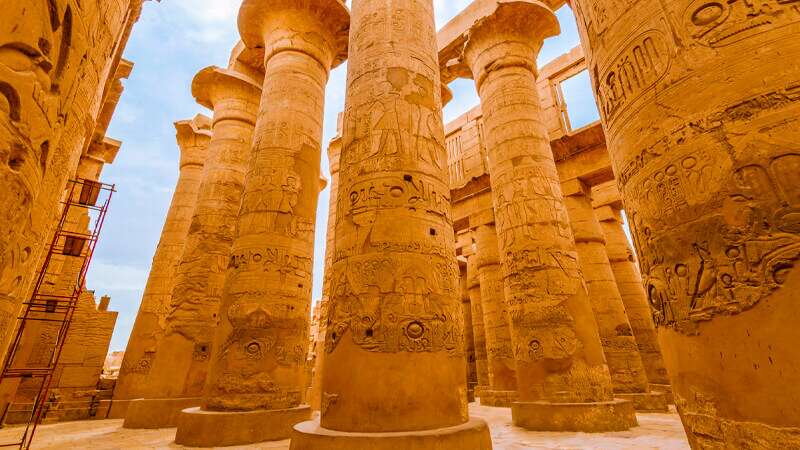
Luxor Egypt Temple of Karnak

This archaeological temple is located on the eastern bank of the Nile, specifically in Luxor, which in Pharaonic times was called “Thebes”, or “the fortified city”,

which was known as “Abit Rust”, meaning the most prestigious and revered place.
In the past, the Karnak temple was known as “Bar Amun”, meaning the house of Amun, the god of the sun and fertility. In the Middle Kingdom, the area around Karnak

was called “Ebit-Isut”, meaning the most chosen one, because it was the main place of worship of the god Amun, and this was found. The name is engraved

on the walls of the “Senusret I” cabin, and many other names were taken, including “Nisut-Tawa”, meaning the throne of the two states, and

with the advent of the Arabic language, it was distorted to become “Karnak”. Karnak Temple is the second largest ancient religious complex in the world after the Temple of Angkor Wat in Cambodia is the second most visited historical site in Egypt, after the Pyramids of Giza.
It consists of four main parts: the courtyard of “Amun-Ra”, the province of “Mut”, the province of “Monto” and the temple of “Amenhotep IV” that was dismantled,

in addition to a few small temples and sanctuaries that connect the province of Mut, the Temple of Amun-Ra, and the Luxor Temple.
The “road of rams” represents the main gate of the temple, which is two rows of statues for a group of rams, it was called in the old way “Wat Nather”,

on its sides there are 1200 statues in the form of a sphinx with a ram’s head, that head symbolizes the god Amun, placed in this way as a type From the protection of the temple,

and at the other end of the road of rams, there is another great edifice, the Luxor temple
Karnak includes more than one temple, including the temple of the god Amun-Ra, the god of the sun, wind, and fertility.
And in the heart of Karnak is the “holy lake”, that lake that is still considered one of the secrets of the Pharaohs, with its steady water that does not dry out throughout the year,

despite its distance from the Nile River, and despite the passage of 3 thousand years of its existence, and strangely enough,

it does not dry out despite the factors of loss, evaporation, and leakage. Even the women of Luxor have come to believe in its sanctity, and they go to it to seek blessings from it.

It served as a treasury, an administrative center, and a palace for the pharaohs of the modern state.
The temple contains an exhibition in which there are various arts of construction, sculpture, and engraving and a long record of historical events in ancient Egypt.
The Great Karnak Temple features enchanting sound and light shows every evening, which is a great way to discover Karnak Temple.

Valley of the Kings:
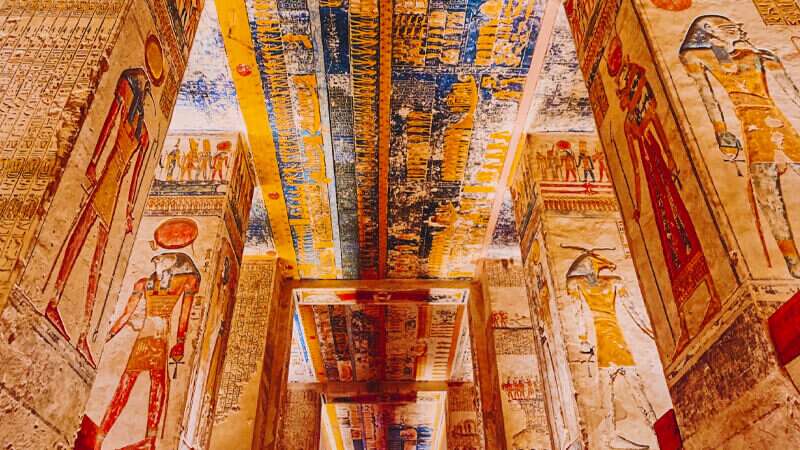
Luxor Egypt Valley of the Kings

The Valley of the Monarchs’ Tombs is the world’s most renowned historical tombs, where pharaohs buried their kings for 500 years.

Valley of the Kings is located in a dry river valley on the west bank of the ancient city of Thebes (modern Luxor), thus the name. However, this name is not totally true.

because certain members of the royal family other than monarchs, as well as some non-royal, but high-ranking persons, were buried there

The Valley of the Kings is separated into two valleys: eastern and western. The eastern section is the most well-known.

where the western valley has a few tombs and the Valley of the Kings has almost sixty tombs in total

including twenty unfinished tombs that are little more than holes

This location for kings’ burials was carefully picked; it lies on the Nile’s western bank since the sun deity descends there (dies)

The West was related to burial beliefs since people died on the western horizon in order to be resurrected and rejuvenated on the eastern horizon.

For this reason, ancient Egyptian tombs were often found on the Nile’s western bank.
The valley was not chosen at random to create royal tombs. The pyramid represented resurrection and endless life.

and the pyramidal form was thought to be a divine sign. Hathor, the “Lady of the West,” ruled over this region and the top itself.
So far, around 63 tombs have been unearthed in the Valley of the Kings, including royal and non-royal graves.

Luxor Temple:
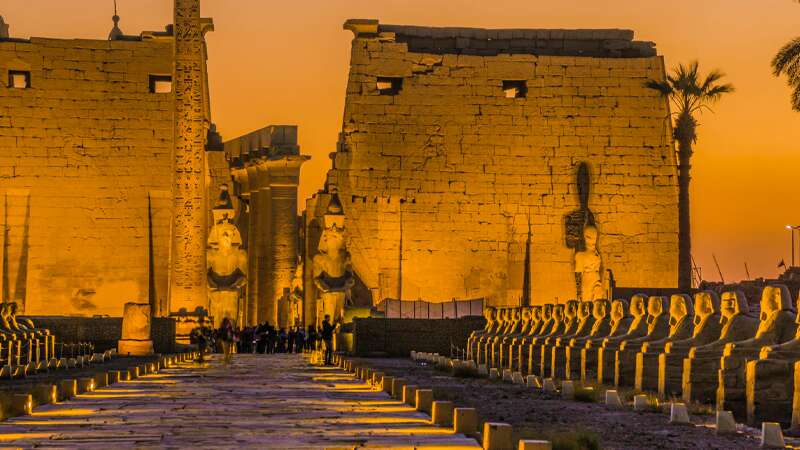
Luxor Temple

Luxor Temple is roughly three kilometers south of Karnak Temple, which was previously linked by a pedestrian route studded with sphinxes.

This temple’s earliest evidence goes back to the Eighteenth Dynasty (about 1550 – 1295 BC). The Egyptians of antiquity

Because of its position within ancient Thebes, the Luxor Temple was dubbed “Ebit Rasit,” which means “the southern sanctuary” (currently Luxor).

The temple was built in the early 1400s. The Holy Trinity was created to honor the deity Amun, his wife Mut, and their son, the god Khonsu.

Then, on the remains of the ancient temple, King Amenhotep III, one of the most significant and notable rulers of the nineteenth dynasty, ordered the construction of the Luxor Temple.

The whole temple was constructed between the eighteenth and nineteenth dynasties.
A path leading to the shrine is lined on both sides by sphinx sculptures called (The Road of Rams).

This route goes back to the time of the Thirtieth Dynasty King Nectanebo I. This path links Luxor Temple with Khonsu Temple.

Karnak temples are found here. This route superseded the rams’ road, which goes back to King “Amenhotep III’s” reign.

who discovered various monuments carrying his nickname at the Khonsu temple’s southern gate Two stone obelisks predate the structure constructed by King Ramses II.

The western obelisk was moved to Paris’ Place de la Concorde (where Muhammad Ali Pasha presented it to France), while the eastern obelisk remains in its original location.

in front of the edifice’s northern tower

Medinet Habu:
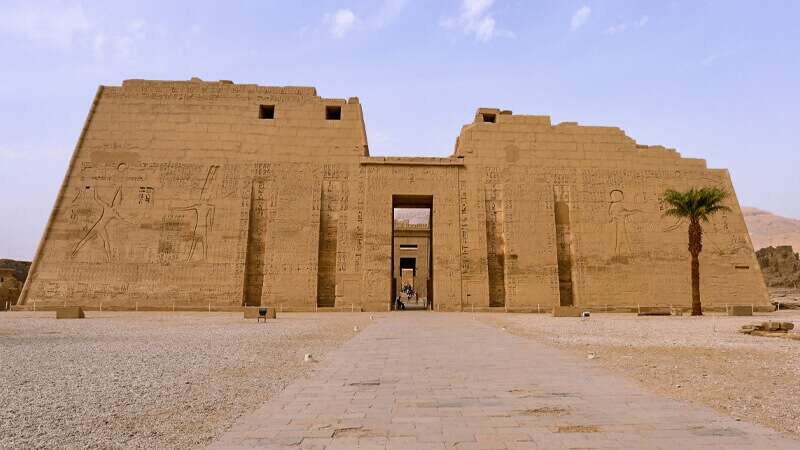
luxor epypt

His superb museum has a carefully picked and wonderfully exhibited collection. Explained antiquity collection extending from the end of the Old Kingdom to the Mamluk era,

mostly from the Theban temples and necropolis

Several treasures may be seen on the ground floor gallery, including a well-preserved limestone relief of Tuthmosis III and an excellently carved figure of Tuthmosis III in greywacke.

Amenhotep III is enshrined at the Temple of Karnak, guarded by the mighty crocodile deity Sobek. One of the rare surviving specimens of Old Kingdom art

A relief of Unas-ankh was discovered in his tomb on the west bank of Thebes.

In 2004, a new wing was devoted to Thebes’ splendor during the New Kingdom era. The highlight and primary cause

The two royal mummies for the new structure are Ahmose I (beginning of the 18th dynasty) and the mummy some believed to be Ramses I.

(founder of the 19th dynasty and father of Seti I), wonderfully exhibited in gloomy chambers without their wrappings
The military motif is softened on the top floor with representations from normal life depicting New Kingdom technology.

Workers collect papyrus and prepare it into sheets for writing in multimedia displays. Young boys are depicted reading and writing.

Write hieroglyphs alongside the development of scribes and architect’s equipment.

A little chamber on the left, immediately before the exit, houses 16 of the 22 sculptures discovered in Luxor Temple in 1989.

All of these ancient Egyptian statues are beautiful. Still, a nearly new 2.45m-tall statue takes pride of place at the far end of the hall.

Amenhotep III wearing a pleated kilt in a quartzite statue.

Tombs of the Nobles:
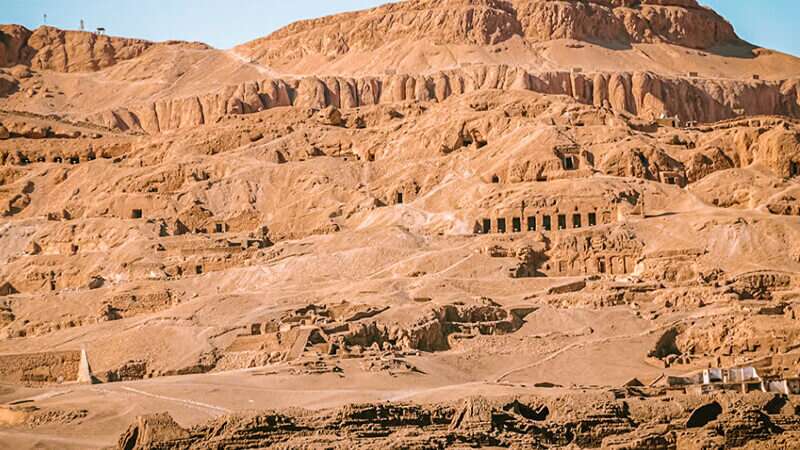
Luxor Egypt

The tombs of the nobles, west of the Nile, in the city of Aswan, have a special nature that is unique to them from the rest of the tombs of the ancient Egyptians,

and there are 50 cemeteries that include the remains of the rulers and princes of Aswan during the ancient and middle ages, says the director of the Aswan and Nubia Archeology Area
Nasr Salama that the most famous tomb is the tomb of Haqail, who ruled Aswan during the era of the Old Kingdom.

He is considered one of the most famous rulers of Aswan during different ages and has his own cabin
On the island of Elephants (Elephantine), it is called the Haqayel cabin, and it contains a distinguished group of statues of it. During the era of the Middle Kingdom,

Hazael was considered one of the very sacred figures. Salameh indicates that the tombs of the nobles were built on two levels, one above the other,

and distinguished from any other Pharaonic tombs because it was built on the foot of a mountain and directly overlook

the Nile and by comparing it with the tombs of the western mainland in Luxor, which is quite far from the Nile and almost in the desert for

the tombs of the nobles that were carved at the foot of a rocky mountain. And the carving in the heart of the mountain is a steep vertical slope.

He said that the ancient Egyptian considered the cemetery more important than the house in which he lived because he believed that life was divided into three parts,

and the least part of them he lived on the surface of the earth, followed by the one who spent in the cemetery, and so he was interested in preserving his body in a safe place,

for his belief That the soul, upon its return, identifies with the body in which it lives, and through it, the merger between the soul and the body occurs, and it revives again
To live his eternal life, when entering the cemetery, we find a group of various inscriptions and drawings that represent the work of agriculture and the most important

and favorite events that characterize his life and that he is proud of, and what he enjoys in the other world. The nobles have wells with a depth of

more than 10 meters and at the bottom of the well, the mummy is placed with the corpse inside. But you may wonder how the well was dug and how the coffin and

the corpse were lowered across the Nile to the bottom of the well. This indicates that the ancient Egyptians had a unique genius in dealing with stone

and various materials the archaeologist Nasr Salama said that the tombs open for visits are only five out of the fifty, indicating that in cooperation

with foreign archaeological missions working at the site, one or two cemeteries will be opened every season to double the number of open cemeteries.

Colossi of Memnon :
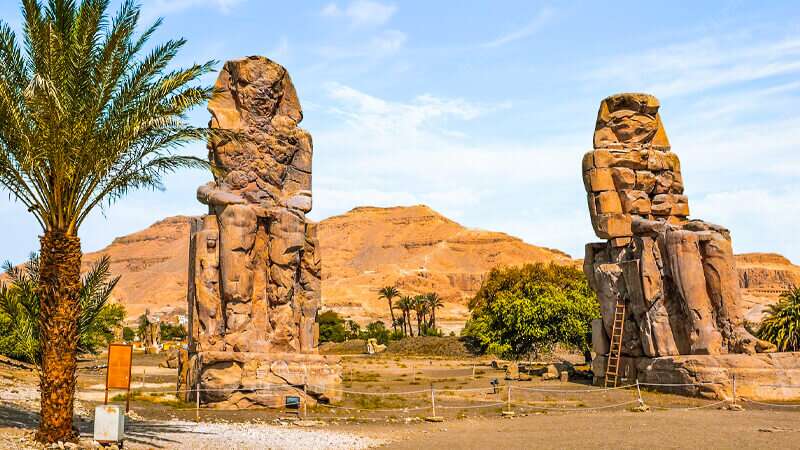
luxor egypt Colossi of Memnon

The statues of Memnon are unknown to our time, and the statues of Memnon belonged to Amenhotep III, one of the kings of the Eighteenth Dynasty.

This family is considered one of the most powerful families that ruled Egypt in ancient times. Because they are the first things that tourists see when they visit Luxor,

and each piece of the Colossi of Memnon weighs about 1,000 tons.
The Statue of Memnon is a pair of giant statues made of stone. The statue of Memnon was built in the fourteenth century BC, during the reign of Amenhotep III,

one of the kings of the ruling dynasty in the fourteenth century. The statue of Memnon is about 65.60 feet high. It is worth mentioning that the statues of Memnon

were made of Quartzite sandstone, and this stone is extracted from the Red Mountain or Jabal al-Silsila, the stone was transported to Luxor by land,

and the statues of Memnon Amenhotep III and his wife Queen Tiye are shown sitting with their hands resting on their knees, facing the Nile in the east.

The statue of Memnon was named by this name at the end of the first century BC, and legends say that the reason for naming the statue of Memnon

this name comes from the name of the Greek hero Memnon, who was king of Ethiopia at this time. The Greek hero Memnon was killed by Achilles

in the Battle of Troy and due to the courage of Memnon Memnon, which made him a hero in the eyes of the Greeks and Greeks, they saw that

the statue of Memnon was associated with this legend and had nothing to do with Amenhotep III and his wife, and the sayings of Egyptian historians

have multiplied that Amenhotep III and Memnon are the same people.
The statue of Memnon was famous for its sunrise singing, and the sunrise singing was a mysterious sound emitted from

the statue of Memnon daily at sunrise. Scientists and researchers believe that this sound is caused by the air that passes through the pores of the stones in the two statues,

but it is just a guess. On this talk to this time.

It is worth noting that the Roman Emperor Hadrian and his wife Yebina, had come to Egypt and spent several days next to the statue of Memnon to enjoy their singing,

and many historians were also keen to write their names and notes on the statue of Memnon, and there are eight names of Egyptian rulers

in the Roman era recorded on the statue of Memnon.

Ramesseum Temple:
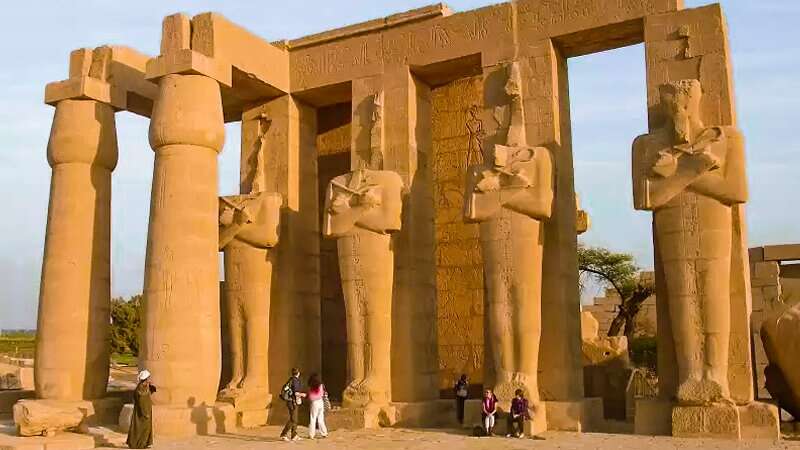
luxor egypt Ramesseum Temple

Luxor Governorate is famous for the many temples that were built on its land when it was the capital of ancient Egypt for thousands of years. However,

among those temples, what was a witness to the glories of the Pharaohs in wars and the aggressors responded to the aggressors from their holy lands.
King Ramses II ordered the construction of the Temple of Ramesses in order to show the greatness and status of Ramses II among the ancient kings
The Ramesseum is one of the funerary temples that were built for the dead in ancient Egypt.
It includes a number of huge statues of King Ramses II and a number of inscriptions that tell the nature of life in that period of the Pharaonic state.

Currently, the remains of huge statues and columns, part of which were destroyed during the last period
The temple is surrounded on three sides by corridors and storerooms with vaulted ceilings of mud bricks with some stone architectural elements,

and they were used most likely to store grains, clothes, leather, oil pots, wine, and beer, including what contained two rows of legends

and is believed to belong to priests and employees.

Valley of the Queens:
luxor egypt Valley of the Queens

The valley is located near the famous Valley of the Kings, on the west bank of the Nile River in Luxor Governorate (Old Thebes) in Egypt.

The ancient Egyptians believed that the cave gave the dead another life.
The Valley of the Queens consists of the main valley, which includes about 91 cemeteries, in addition to subsidiary valleys that include 19 other tombs,

such as Wadi Prince Ahmose, Wadi Habl, and Wadi Dolmen.

Tomb of Queen Titi:
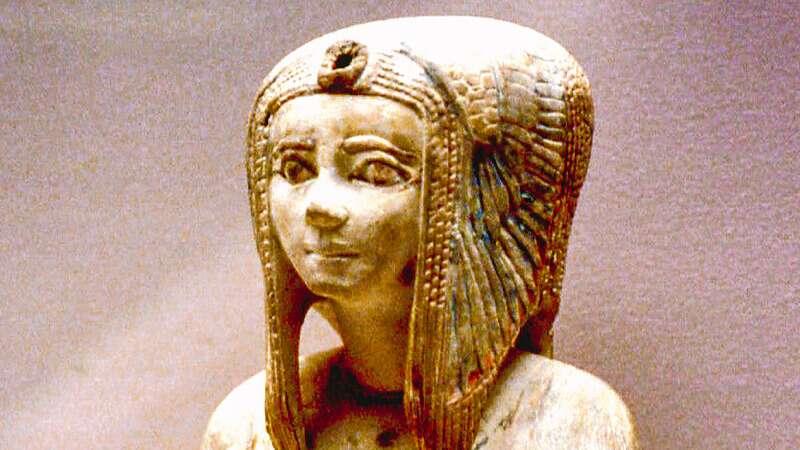
Tomb of Queen Titi luxor egypt
Tomb of Queen Titi

The tomb was recently opened, and the inscriptions on its walls depict the fields of “yarrow” or paradise as depicted by the ancient Egyptians,

in addition to mummification rituals and the sacred journey to eternal life.
A burial pit was excavated in the inner chambers and excavations yielded a variety of funerary furniture, including coffins and personal items.

Luxor Museum :
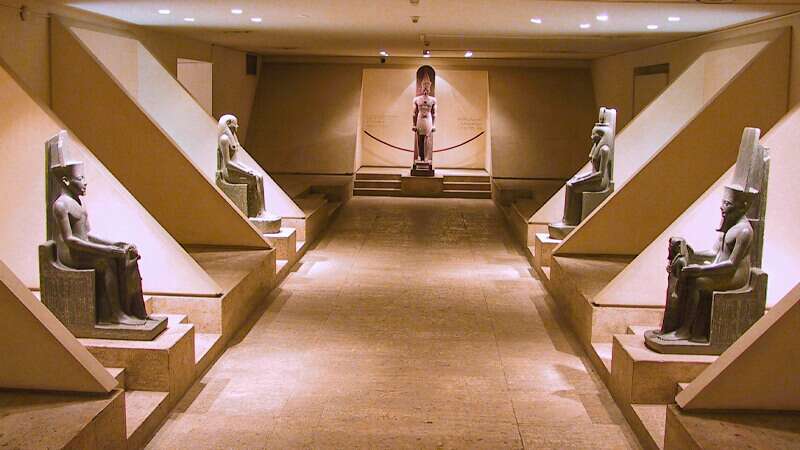
luxor egypt Luxor Museum

The Luxor Museum is located on the Nile Corniche in Luxor and is considered one of the most beautiful museums that include many rare artifacts discovered in Luxor,

such as statues of kings and gods, in addition to many collectibles dating back to various historical periods of Egyptian history. The museum also displays

some of King Tutankhamun’s holdings. Which was discovered in the Valley of the Kings in Luxor in 1922.
The museum was opened to visitors in 1975 by the late Egyptian President Anwar Sadat, accompanied by former French President Valéry Giscard d’Estaing.
It consists of a garden with four large statues and a two-story building divided into six halls displaying about 2,200 artifacts covering ancient Egyptian times,

including the Pharaonic, Greek, Roman, Coptic, and Islamic eras, but the Pharaonic antiquities are the most attractive to visitors to the museum.

On the left side of the main gate of the museum, the garden with its four statues represents a corridor that takes visitors to the door of the museum and

prepares them for the antique historical atmosphere that awaits them inside.

Visitors will receive in the garden a standing statue of King Ramses II, followed by a seated statue of King Amenhotep III, then a standing statue of King Merneptah,

and the last another seated statue of Amenhotep III.
The museum consists of two floors. The first floor includes a group of rare relics that were discovered in Luxor, such as the granite head of the statue of Amenhotep III,

the head of the goddess Hathor in the form of a cow, the statue of the god Amun, a rare head of King Senusret III, the magnificent statue of King Thutmose III of schist stone,

and the most beautiful and largest statue in Egypt from Alabaster for the yield, such as Sok and Amenhotep III, and the Karnak panel,

which includes a hieroglyphic text related to the struggle of the rulers of Thebes with the Hyksos.
The upper floor includes a group of statues of Akhenaten and a number of carved stones known as petals, which were part of one of Akhenaten’s temples

in the East Karnak, some furniture, ornaments, amulets, pots, and some Coptic funerary paintings. In recent years,

a hall has been allocated in the museum in which most of the statues that came out of the cache of Luxor Temple are displayed,

the most important of which is the statue of King Amenhotep III and the statue of Amun and Hathor and others.

Tomb of Nefertiri:
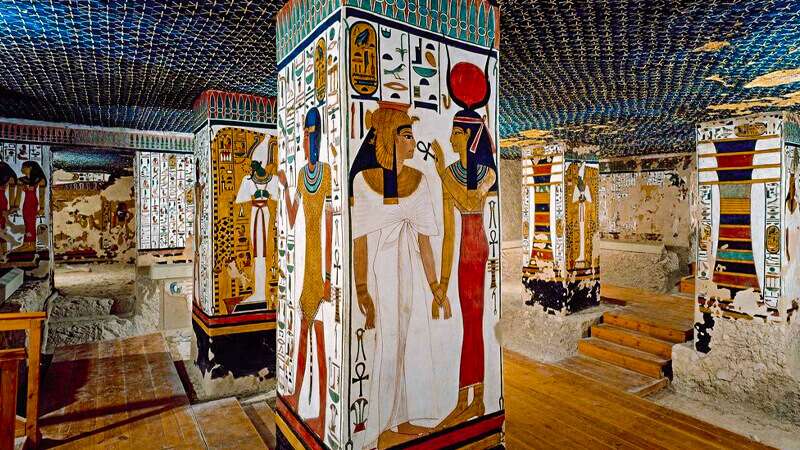
luxor egypt Tomb of Nefertari

Nefertiri is the wife of Pharaoh Ramses II, and she is his most famous royal wife, and he had married her at a time before he ascended the throne and

she was considered a great queen because of her clear impact on the civilization of ancient Egypt, and Nefertiri ruled for 24 years, and it is likely that

she died At an age that varies between 40-50 years, that is, she died after a reign of about 25 years, and her husband, King Pharaoh Ramses Secondary,

built her the largest and most beautiful tomb found in the Valley of the Queens. It is a distinctive tomb and a wonderful example of ingenious decoration.

A mural that reflects her daily life.
Located in the Valley of the Queens, the Italian archaeologist Ernesto Schiaparelli 1904 AD discovered the tomb of Nefertiri,

and concluded at that time that there were many contents that had been stolen by thieves, and found many things inside,

such as the lid of her coffin, which is made of pink granite.

He also found some beautiful gold and porcelain, and a pair of sandals made of palm fronds. A description of Nefertiri’s tomb

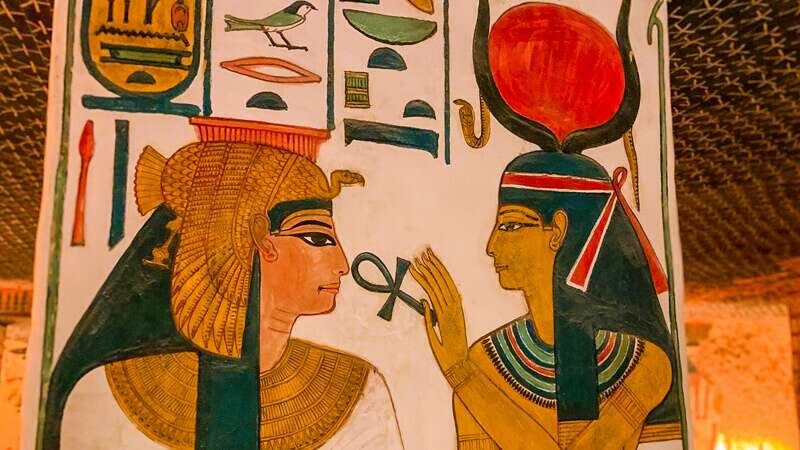
consists of an upper room and a lower burial room, connected by stairs, and drawings on the walls of Nefertiri and a number of gods, insects,

and animals, in addition to hieroglyphic magic spells. These are drawings depicting the passage through the underworld towards eternal life.

As for the temple, it was built only 100 m from the Temple of Ramses II, which is located in Abu Simbel, and this temple was built by order of Ramses II

in her appreciation. The Temple of Nefertari is considered the smallest temple, and it shows a great statue of Nefertiri and Pharaoh Ramses II

and some small statues of royal children next to the two colossal statues. Inside the temple, there is a huge vertical hall containing columns

with carved tops in the form of Hathor’s head.

Tomb of Seti:
Tomb of Seti luxor egypt

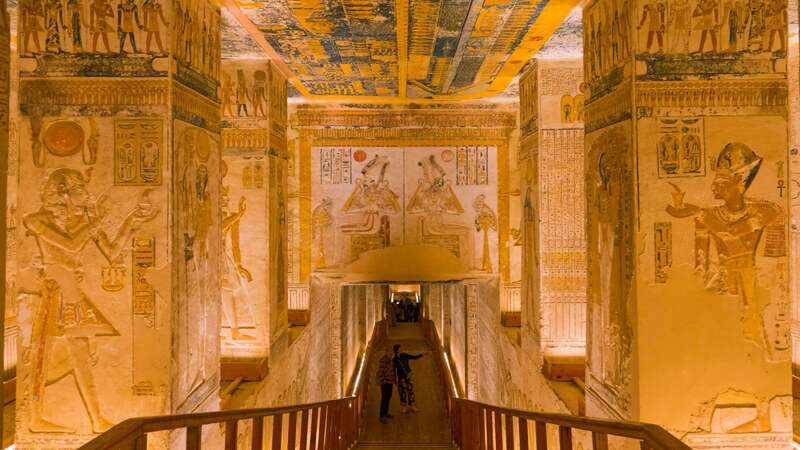
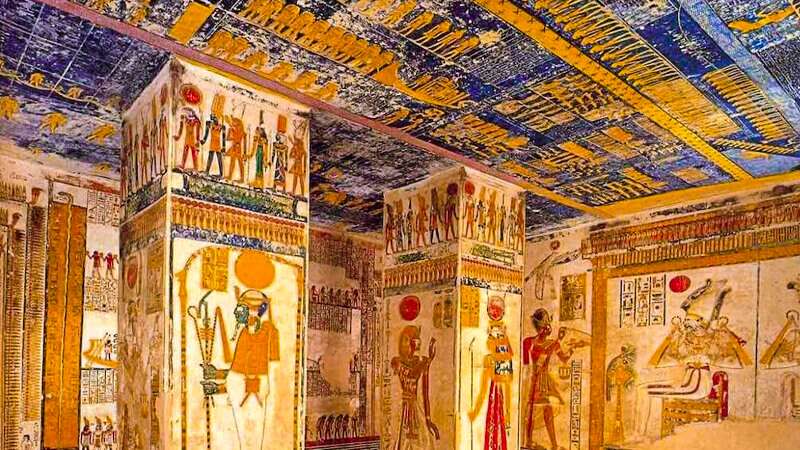
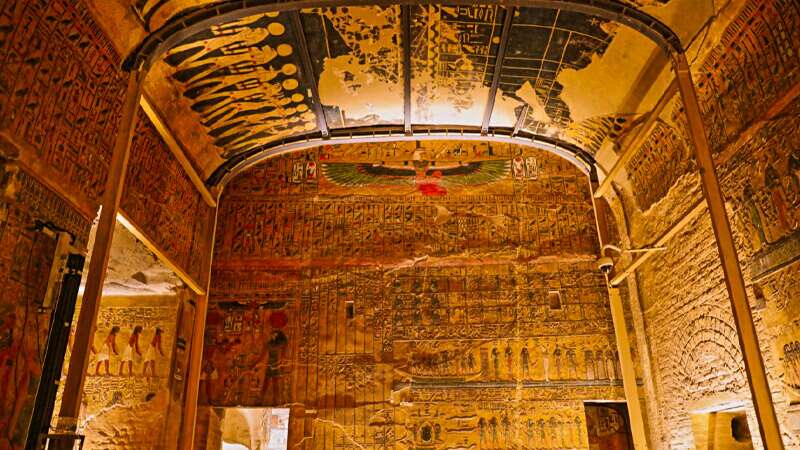
Seti I’s tomb is the longest, deepest, and most beautiful of the Valley of the King’s tombs. It is considered the most important royal tomb,

the largest of which was carved into the rock of the mountain in Luxor (ancient Thebes), and it has drawings of Seti as he worshiped the gods.
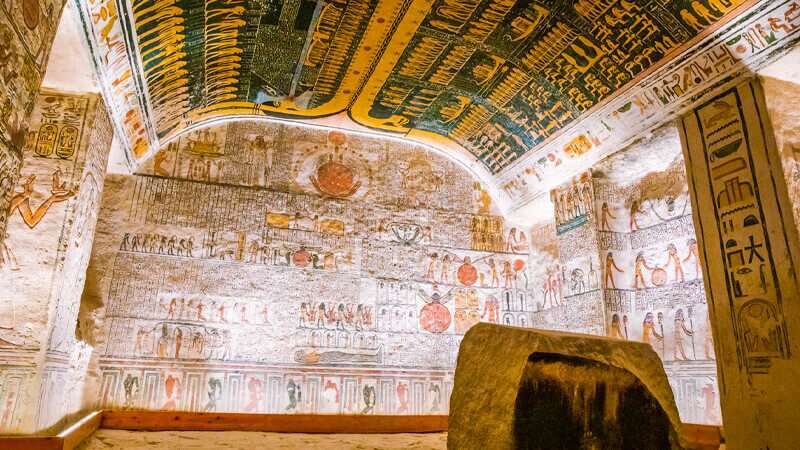
Like other tombs in the Valley of the Kings, the tomb of Seti I was decorated with various funerary texts, the purpose of which was to ensure

his successful transition to the underworld. The tomb of Seti I was the first to be fully decorated with texts. The beautiful scenes and inscriptions are distinguished

by the quality and accuracy for which the reign of Seti I was famous. Among the funerary texts inscribed in the cemetery are the texts of the songs of Ra,

the book of Imi Duat, meaning “what is in the other world” and the book of gates, in addition to the Book of the Heavenly Cow and the wonderful astronomical scenes

that decorate the ceiling of his burial chamber, which mimic the night sky.

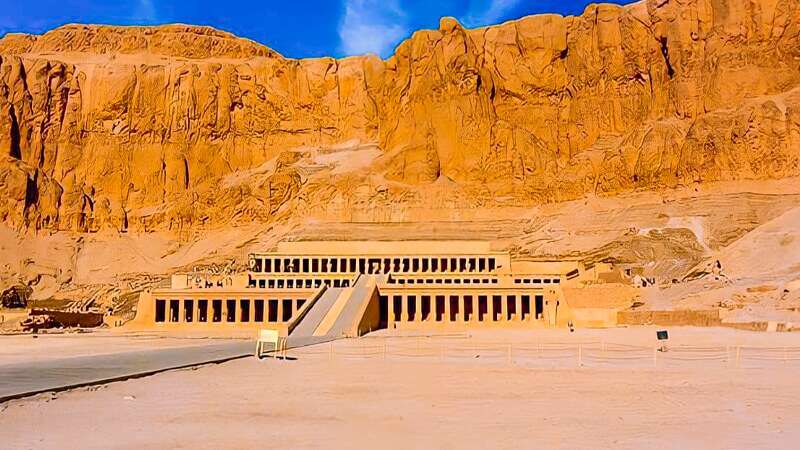
Temple of Deir al-Bahri (Queen Hatshepsut’s Temple):
Luxor Egypt

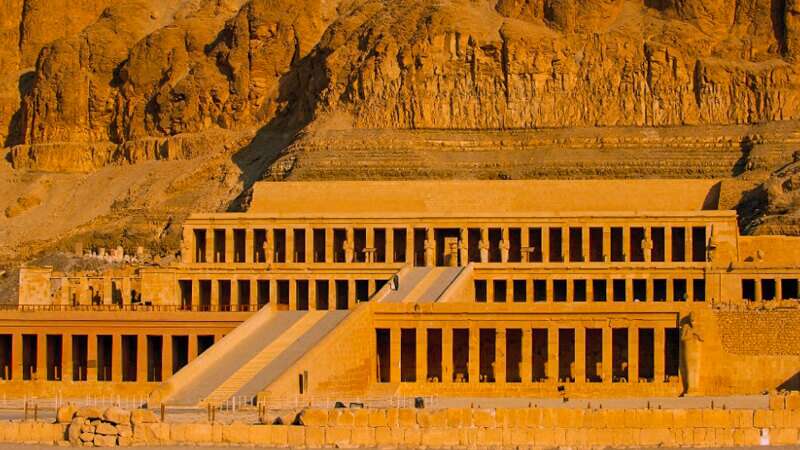
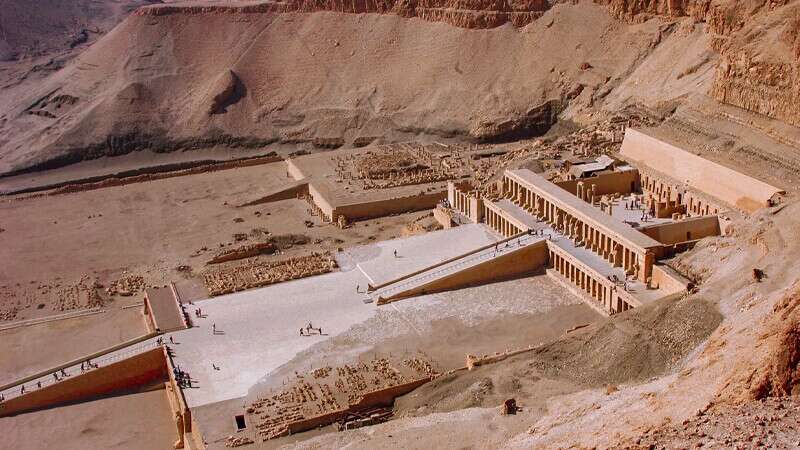
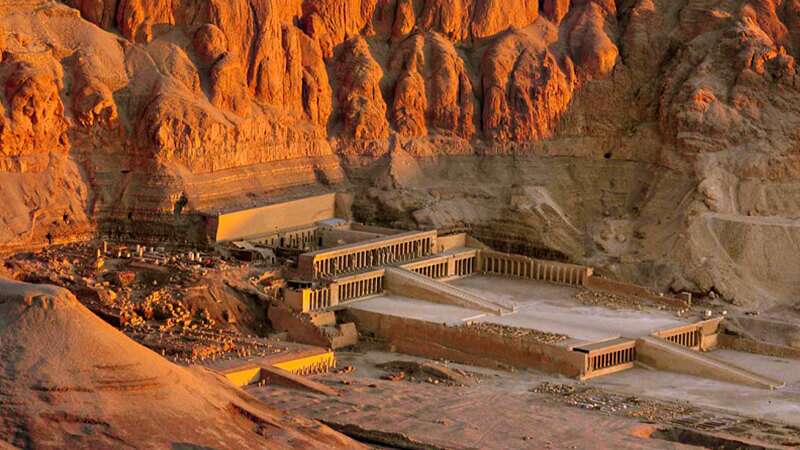
The ancient Egyptians called it the “Bridge of Jisro-Amun”, meaning the Holy of Holies of Amun, built by Queen Hatshepsut on the west

bank of the Nile opposite Thebes (the capital of ancient Egypt and the seat of the cult of Amun) (Luxor today).

The Temple of Hatshepsut is distinguished by its unique architectural design compared to the Egyptian temples that were built on the eastern bank of the Nile in Luxor
The temple consists of three tiered layers at the bottom of the valley, where the funeral rites were held for both Queen Hatshepsut (who received the title of king)

in addition to her father, King Tuthmosis I, where they were presented in offerings to ensure the queen’s soul eternal life in the next world.
The site of the mortuary temple on the western mainland was linked to the idea of ​​sunset, as the journey of the god of the lower sun in the underworld.

This temple was also on the other side from the Temple of Amun in Karnak on the eastern bank, where the statues of the Lord Amun,

his wife Mutt and their son Khonsu were walking in an annual festive procession known as the Beautiful Valley Festival to cross the Nile and

visit the royal funeral temples, including the Temple of Hatshepsut, which was one of the important stations for this procession.

Tomb of Tutankhamun:
Luxor Egypt

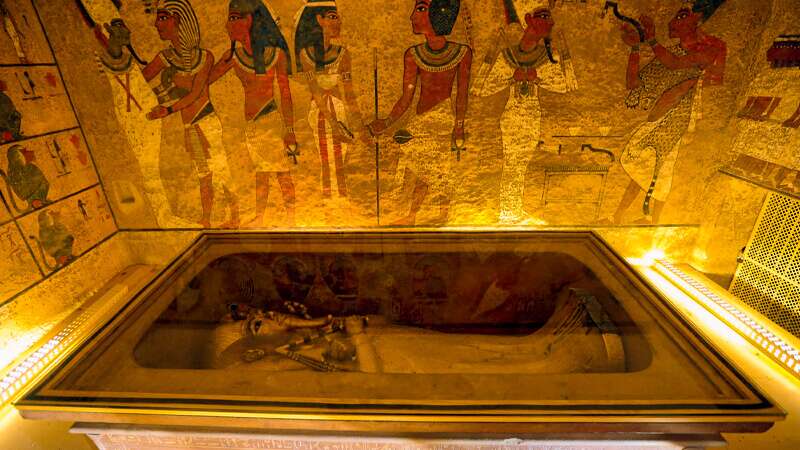
The tomb of King Tutankhamun (1336-1327 BC) of the Eighteenth Dynasty is world-renowned because it is the only royal tomb in the Valley of the Kings

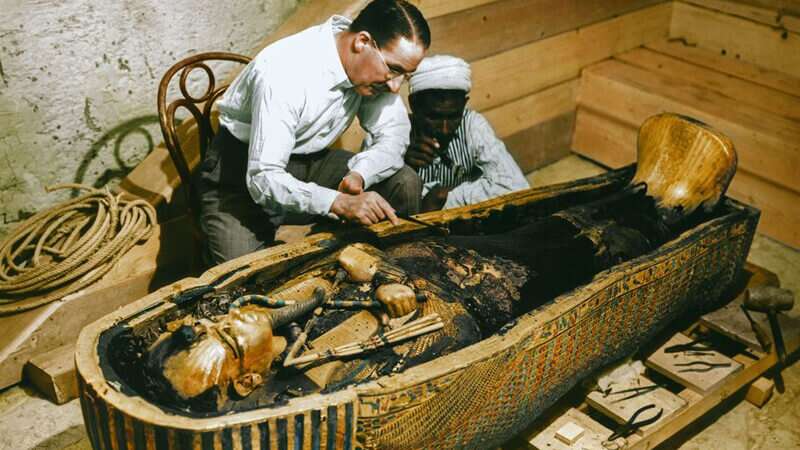
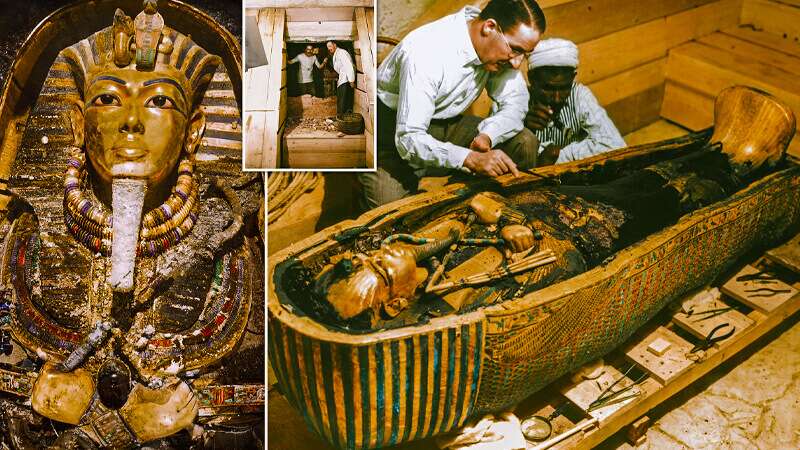
whose contents were discovered relatively intact and complete, giving us an idea of ​​the way of living in the royal palace. The tomb was discovered in 1922 by Howard Carter
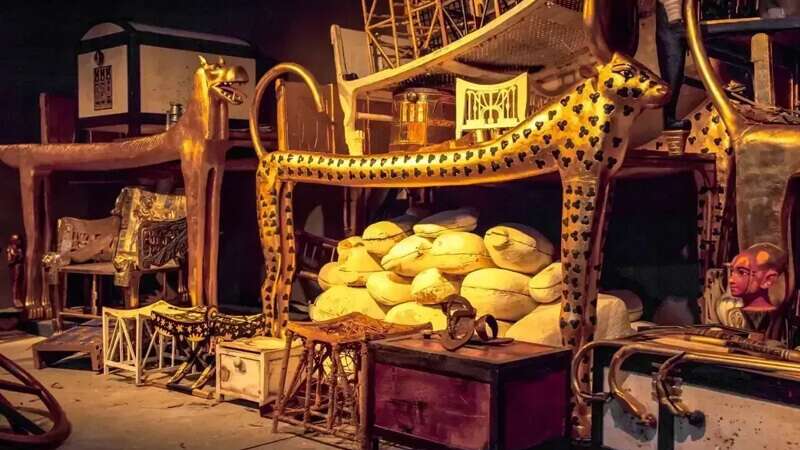
He found Tutankhamun’s clothes, gold ornaments, fabrics, a large number of scarabs, and statues, as well as bowls, decorative items, and incense.

He also found pieces of furniture, chairs, oil lamps, toys, food stocks, drinks, golden and pottery vessels, chariots (which were drawn by horses), and equipment. battleship.
Tutankhamun continued to rule for nearly ten years until his death at the age of 18 or 19 and was buried in the Valley of the Kings.
3,500 artifacts were discovered in the tomb of King Tutankhamun. The tomb of King Tutankhamun is considered small compared to the other tombs of kings,

and it was the only tomb that was not looted among the tombs of the kings of the eighteenth and nineteenth dynasties.
The scale of Tutankhamun’s fortunes unearthed is unparalleled because it was one of the only ancient tombs found almost intact – or completely intact.

Among the artifacts: an iron dagger that may have been made from a meteorite after X-ray detection, as well as two young mummies,

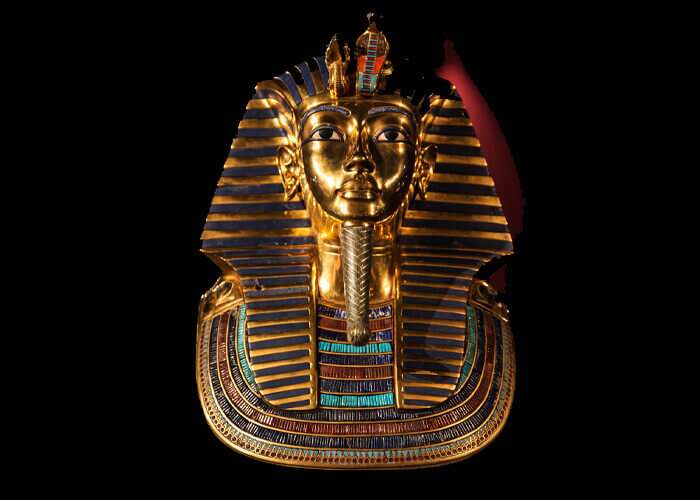
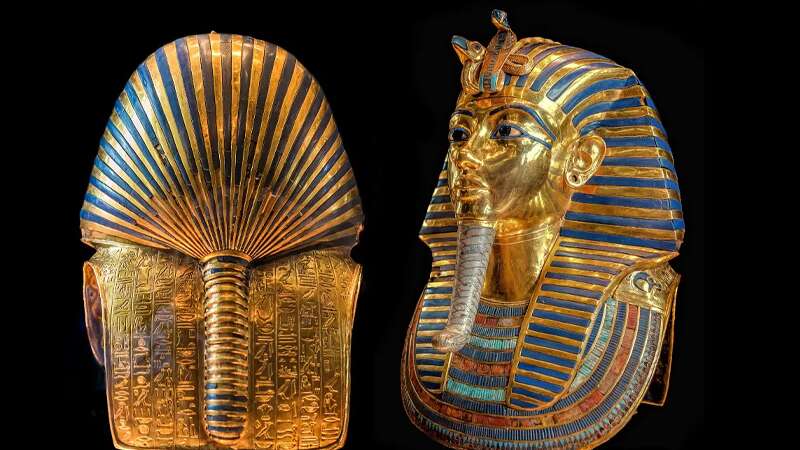
genetically determined to be Tut’s children, both stillborn; The famous funeral mask, made of pure gold, is heavier than a bowling ball, but as thin as snakeskin.

Mummification Museum:
luxor egypt

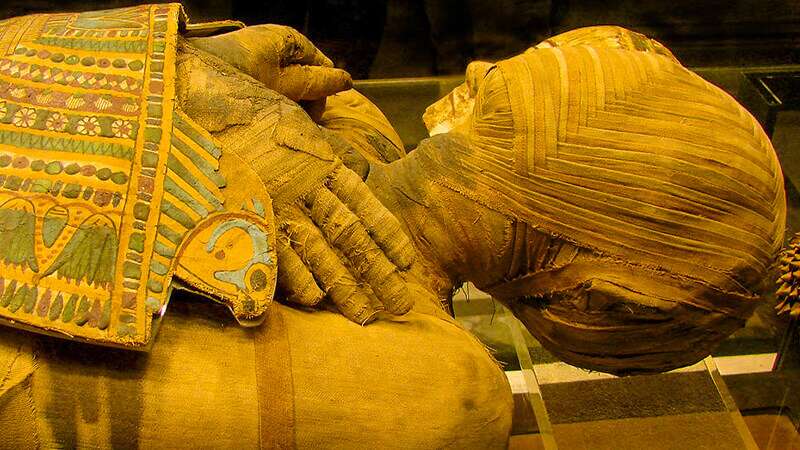
The mummification Museum is located on the Nile Corniche, north of Luxor Temple.

Mummification and the tools used in that process, visceral utensils, mummification deities,

and the cemetery, in addition to displaying groups of protection amulets, a variety of coffins, and funerary paintings. The museum also displays a number of human mummies

and a group of animal mummies such as crocodiles, cats, and fish
The museum has an area of ​​about 2035 square meters and contains the following sections: The exhibition hall: which in turn includes two sections, the first is the ramp,

where there are ten hanging panels that show the details of the funeral procession rituals and the procedures that follow from death to burial

from the reality of an instant papyrus which is displayed in the British Museum, The second one starts at the end of the ramp, in which more than sixty pieces

are displayed in 19 glass display windows.

The Mummification Museum exhibits revolve around 11 main themes (the gods of ancient Egypt – mummification materials – organic materials – embalming fluids – the methods used in the mummification process – Kanon pots). To preserve the internal viscera of the deceased and it took the form of the four sons of Horus, namely “Emst”, “Hapi”, “Dawamotiv”

and “Kebeh Snouf” – Ushabti – amulets – the sarcophagus of Badi Amun – the mummy of Masharti (the son of King Ba Najm I, who was a high priest of Amun and commander of the army)

and it is the only human mummy in the museum – mummified animals).
The mummification process involved many complex steps that took about 70 days and were accompanied by the establishment of many rituals and the recitation of incantations,

where the organs of the deceased are carefully removed through a small incision in his body and kept in jars known as canopic pots, then the body is dried using natron salt,

and finally, It is wrapped in linen wraps, and magical amulets are placed inside the wraps around different parts of the mummy to protect the body,

and finally, the family of the deceased carries his mummy to be placed in a coffin for burial.

Deir el-Medina:
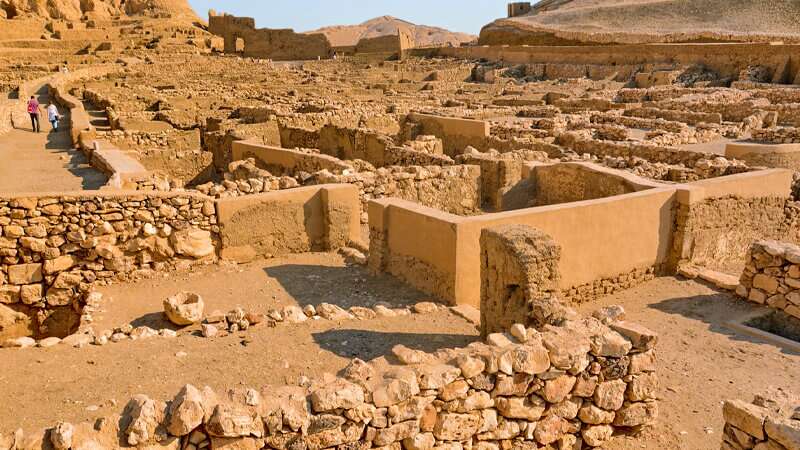
Deir el-Medina luxor egypt

In the city of Luxor, where there is history and archeology, Deir el-Madina is located, and its name itself is strange to the ear as part of the pharaonic history,

but let me assure you that without Deir el-Madina, Karnak and the entire Valley of the Kings and Queens would not exist.
The city of Luxor, where the Temple of Habeshut and the tomb of Ramses, but certainly these kings did not make this visual dazzle, but made for them,

in the hands of skilled Egyptian artists, and industrious workers, and the former pharaohs of the 18th and 20th dynasties were keen on the welfare of artists

and workers a lot so they built these The city, which by their era was very elegant and distinguished.
It is located north of the Valley of the Kings in Luxor, at the Thebes cemetery, where you will find an integrated city called Deir el-Madina.

The fact is that the city did not have a name previously in the Pharaonic era, but it was recently named.
The city is an integrated community of pharaonic houses, ornate tombs, and dozens of small dazzling details, and you will discover that it was a city

that was built to be an integrated residence for workers.
The reason for naming the city, Deir al-Madina is what happened to the temple of the goddess of the pharaohs Hattori,

which was built during the era of the Ptolemies, but with the entry of Christianity to Egypt, churches were not available in this remote place,

so the residents took it as a church for worship and were called the monastery, and therefore the area was referred to as Deir al-Madina, and when

With the discovery of tombs and workers’ homes there The entire area was named after Deir el-Medina.

Temple Of Khonsu:
Luxor Egypt

Khonsu was the son of Amun and Mut, who formed the Theban triad with him. He was a moon deity who appeared as a man with a falcon’s head wearing a crescent moon headpiece topped by the complete lunar disc. He is sometimes shown as a baboon, like Thoth, who was also a lunar deity.

Khonsu was said to have the power to drive forth bad spirits. In order to cure his daughter of an illness, Rameses II sent a statue of Khonsu to a sympathetic Syrian ruler.

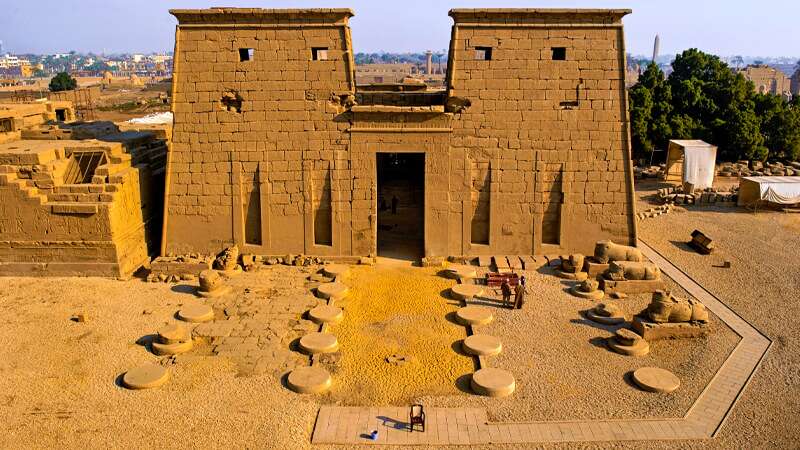
Ramesses III erected his temple inside the Karnak boundaries; it consists of a peristyle court surrounded by a portico of twenty-eight columns. There is also a hypostyle hall attached to the bark’s sanctuary, with chapels to the left and right and a stairway leading to the roof.

The whole pylon, built, is 113 feet (34.5m) long and 59 feet (18m) tall. On its front, four slots are created to accommodate masts with banners.

In front of the pylon are the remnants of a colonnade surrounded by sphinxes.
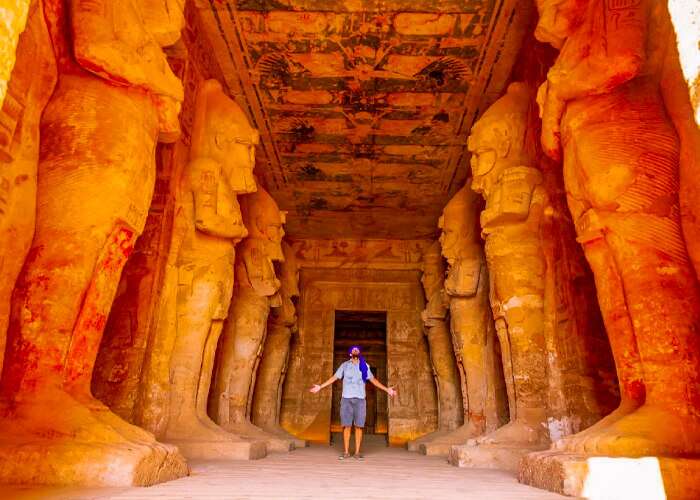
The Abu Simbel Temple in Aswan Governorate is one of Egypt’s most famous archaeological temples. The importance of the Great Abu Simbel Temple
Ramses II was the most famous king of Egypt from the era of the modern state. built the temples, known as the Great Temple of Abu Simbel for Ramses II and

the Small Temple of Abu Simbel for Nefertari is among Egypt’s most famous monuments.
It is believed that Ramses II sat on the throne in his late teenage years and ruled Egypt for 67 years.
This is due to its association with the phenomenon of the sun perpendicular to the face of the statue of Pharaoh Ramses II twice a year,
the first corresponding on October 22 and the second on February 22 of each year.
It is referred to as the Nubian Monuments and honors Ra-Horakhty or Horus, Ptah, and Amun as the three most important deities of the time.
They’re on the UNESCO list of World Heritage Sites because of this.

Where is Abu Simbel temple located?

The Abu Simbel temple is located in southern Egypt near the border of Sudan on the western bank of Lake Nasser, in the city of Aswan,

which is located on the banks of the Nile and is considered one of the cities suitable for relaxation and a center for trips because it has many temples

and a series of slopes that overlook the Nile. The first waterfall on the Nile and the completion of the High Dam in it helped enhance interest in it.

Abu Simbel Temples
Abu Simbel Temples

Relocation of the Abu Simbel Temples

Did you know that the dam’s construction was one reason for moving the Abu Simbel temple?

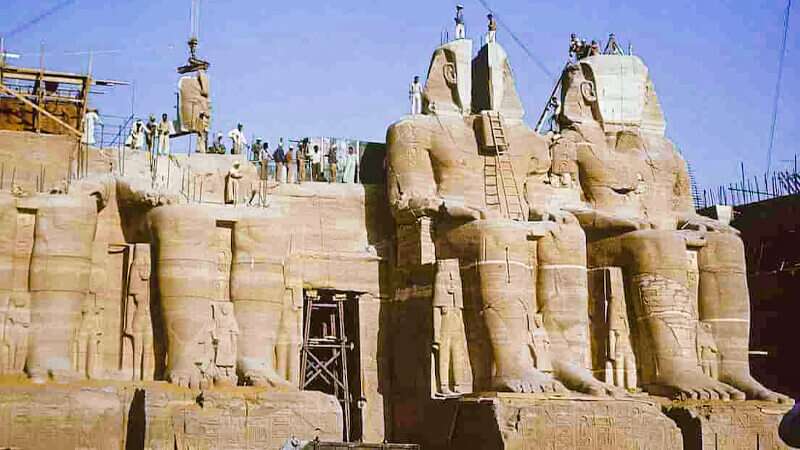
Abu Simbel temple was relocated due to the fear of flooding from Lake Nasser due to the construction of the High Dam in the Aswan area, yet despite this, it remains one of the top tourist attractions. When the temples became unusable, they were covered in sand until they were rediscovered in 1817 AD, but soon work was done to move this temple in 1967 AD to save it from floods, as work was done to reassemble the statue after it was moved, except that the large structure collapsed as a result of an earthquake, which led to its abandonment; Because the face is missing.

The Abu Simbel temple was salvaged in 1964 AD by an international team of archaeologists, engineers, and heavy equipment operators, costing around $40 million US dollars. The site was carefully cut into large blocks weighing about 30 tonnes, then dismantled and lifted before being reassembled in a new location at an altitude of 65 and 200 meters from the river.

One of the most challenging tasks was transporting the Abu Simbel temple. The difficulties of archaeological engineering

and work have been made to save some of the structures that were submerged in the waters of Lake Nasser, which has led to an increase in the number of tourists who visit it, as there are many buses and cars assigned to them. They can also be reached by plane, as an airport was built specifically for them. towards the temple.

abu Simbel Temples
The Moving of Temple of Abu Simbel

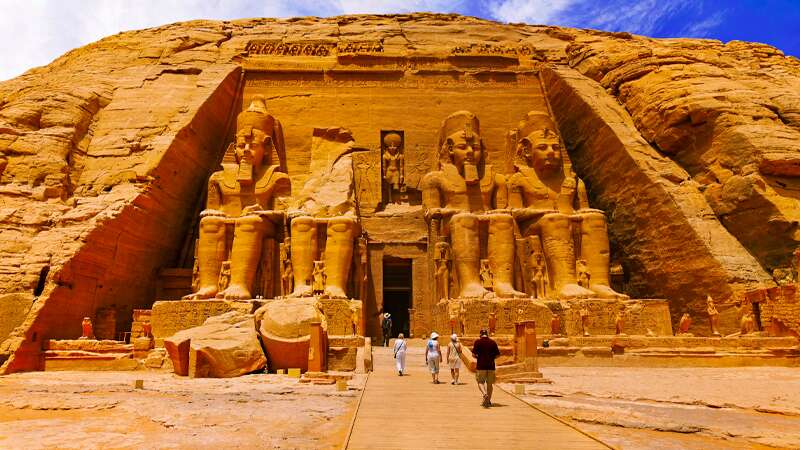
The Great Temple in Abu Simbel temple

The Great Temple in Abu Simbel took around twenty years to construct. It was devoted to the gods Amun, Ra-Horakhty, and Ptah, as well as to the Great King Ramesses himself.

It was also known as the Temple of Ramses II. It is often regarded as the greatest and most elegant of the temples built during Ramesses II’s reign and one of the most beautiful in Egypt.

The Great Temple’s entrance has flanked the front by four monumental sculptures, each 20 meters high and depicting Ramesses II seated on a throne. The main temple’s façade is adorned with hieroglyphs commemorating Ramses II’s tremendous victory in the Battle of Kades.

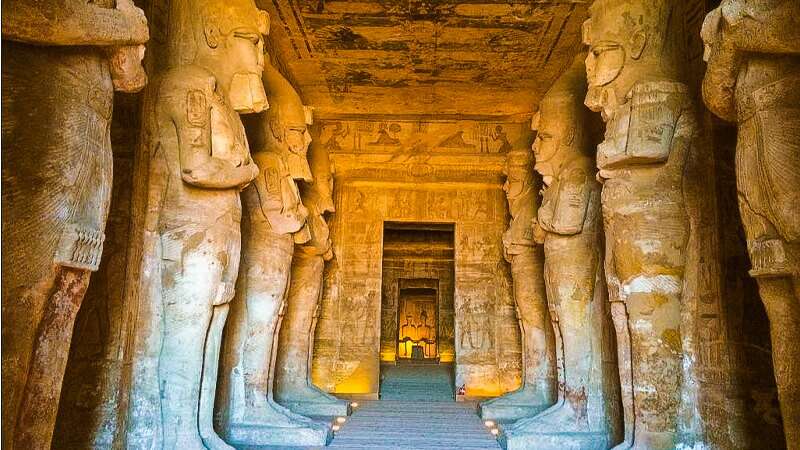
Once you enter the colossal temple, you will see several chambers dedicated to Ramses and significant members of his family. Except for two days a year, the final room, the sanctum sanctorum, is permanently dark. This was not done by chance; it took a thorough understanding of physics, mathematics, architecture, and astronomy to produce this result.

Abu-Simbel-temple

The small temple in Abu Simbel temple

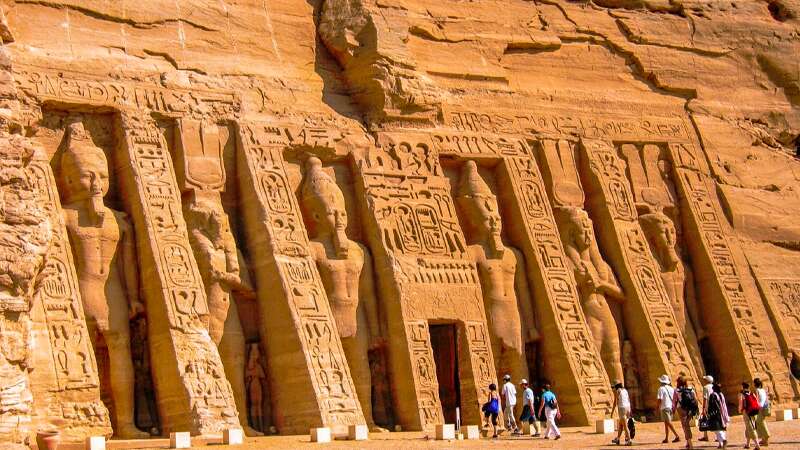
The Small Temple, the second temple, is built for Hathor. It was constructed to memorialize Ramses’ favorite wife, Nefertari, though being substantially smaller than the first.

The queen emerges on a level playing field with the pharaoh. The Temple of Hathor and Nefertari can be another name for it.

The temple’s rock-cut façade is adorned with two groups of colossi separated by a wide entrance.

 Abu Simbel temple

The phenomenon of the sun’s perpendicularity in Abu Simbel

The Abu Simbel Sun Festival is conducted every year on February 22 and October 22, with thousands of people assembling early in the morning

to see this tribute to the ancient Egyptians’ wisdom and ability to perfectly arrange the temple.
People gather at Abu Simbel’s temples twice yearly to commemorate the ancient Egyptians and all they accomplished.

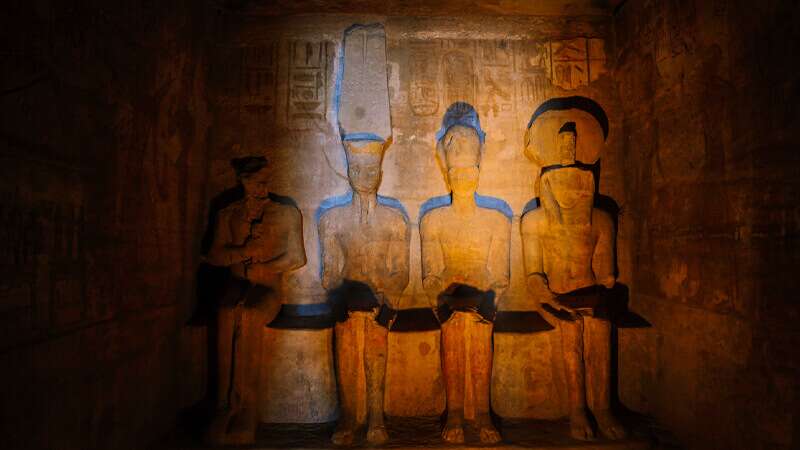
The temple’s central chamber is lighted by the sun during the Festival of the Sun.
The Holy of Holies is a pedestal with a statue of King Ramses II seated next to it and statues of the deity Ra Hor, his sister, and the god Amun.

As well as a fourth statue of the gods Ptah
The sun’s perpendicular phenomena last 20 minutes and may last up to 25 minutes on that particular day.
The sun’s perpendicularity holds two descriptions: the first is that the ancient Egyptians created the temple based on the movement of the ark to identify the start of the agricultural season

and its fertilization, and the second is to begin the harvest season.
The miracle remains that the days of the sun’s perpendicular days are chosen and deliberately determined before the sculpting process,

which entails a perfect understanding of the origins of astronomy and many calculations to determine the angle of deviation of the temple’s axis from the east,

in addition to the architectural miracle that the axis is straight for a distance of more than sixty meters, especially given that the temple is carved in rock.

abu simbel temple

Don’t miss to check out our Egypt Vacation Packages to book your trip to Egypt with up to 10% Off.

Valley of the Queens in Luxor Egypt

The Valley of the Queens is the burial place of the queens in ancient Egypt. It was known in ancient times as “Ta-Sit-Nehru,” which means: “the place of the sons of the pharaoh” or “the place of beauty”; Because in this place were buried the queens of the 18, 19, and 20 dynasties (from 1550 to 1070 BC), in addition to many princes and princesses and a number of the nobility. The tombs of these individuals were preserved by priests who performed daily funeral rites and prayed for the dead nobles.


Don’t miss to check our vacation packages to Egypt to enjoy visiting the tombs of famous queens of Egypt.


Where is the Valley of the Queens Located?

Valley of the Queens is located in Egypt near the famous Valley of the Kings, on the west bank of the Nile in the Luxor Governorate.

valley of the queens


Facts about Valley of the Queens

Valley of the Queens Named by Champollion, To the southwest of the Valley of the Kings, you can find the Valley of the Queens, home to the tombs of many royal wives and children. Although it was used as a memorial in the 18th Dynasty, not until the reign of the 19th Dynasty pharaoh Ramses I that royal queens began to be laid to rest here.

Before that, it was exclusively used as a burial site. The tomb of Queen Nefertari is the most well-known of the over 80 graves in the Valley. Although, only a selected few of these tombs are accessible to the general public at any moment.

After the conclusion of the twentieth Dynasty, the Valley was no longer seen as a royal burial site, in addition to the fact that it had been an important location for the burial of queens, princes, and even some nobles during the 18th and 19th dynasties. There have been several burials in many tombs due to their widespread usage and the modifications made to many of them. In other respects, this required creating burial pits inside preexisting cemeteries.

Very little information is available regarding the Ptolemaic period’s use of the Valley of the Queens. The Valley was again used extensively by the Romans as a burial ground. During the time of the Copts, several of these cemeteries became home to hermits and monks who lived in shelters that had been constructed there.

There is evidence of the presence of Coptic Christians in cemeteries. The pictures on the walls describing death and the Egyptian deities were covered with layers of plaster. Sometimes Christian symbols were removed or painted over them with red ink, and the Christian presence ended in these tombs until the seventh century A.D.

valley of the queens


The most famous tombs in the Valley of the Queens

In addition to the nearly 20 tombs that may be found in the Valley of the Queens’ other subsidiary valleys, the Valley of the Queens in Luxor is home to around 91 graves.

Some of these tombs have multiple scenes and texts from this Book of the Dead, as well as scenes of drawings of the deceased before the gods. In addition, some of these tombs have locations with pictures of the gods. The following are the most well-known of these tombs:

  • Tomb of Queen Nefertari
  • Kha Um Wast Cemetery
  • Tomb of Prince Hurr Khabbesh F
  • Tomb of Merit Amon
  • Tomb of Hanouttawy
  • Tomb of Merit Ra
  • Tomb of Prince Ahmose
  • Tomb of Min Em Hat and Amunhotep
  • Tomb of Queen Dua Tent Opt
  • Tomb of Princess Neferhat and Prince Baki
  • Tomb of Prince Ramses
  • Tomb of the Princesses Merit Ra and War Mariots


The Tomb of Nefertari

Valley of the Queens

The tomb of Nefertari is One of the most famous tombs in the Valley of the Queens in Luxor, which tourists from all over the world visit. It was discovered in 1904 and has not been opened to the public since its discovery until the early nineties of the last century due to some damage to the inscriptions and decorations due to salt deposition. The tomb is replete with descriptions and live murals.

Nefertari was the great royal wife (or chief wife) of Ramesses the Great, where the word Nefertari means beautiful companion, “beloved like no other,” “beautiful of the worldly beauties,” or star-like Nefertari is King Ramses II’s most famous and essential wife. She lived in the nineteenth Dynasty in the 13th century B.C. B.C., and among his other wives, Este Nefert and Neferura died, a Hittite princess and the number of his children reached about 90 sons and daughters.

Nefertari is one of the most famous Egyptian queens, such as Cleopatra, Nefertiti, and Hatshepsut. Nefertari was sanctified like her husband, and she was not the first to hold this preference. She was preceded by Queen Ahmose-Nefertari, the dean of the Eighteenth Dynasty, whom the ancient Egyptians revered according to their beliefs, and Queen Nefertari, the wife of King Tuthmosis IV.

King Tutankhamun Tomb: All you need to know

Pharaoh Tutankhamun, also known as King Tutankhamun or simply King Tut, was the king of Egypt for the ten leading up to his death at the age of 19 in the year 1324 B.C. Tutankhamun’s legacy was virtually erased by his nobles, even though his administration was historically crucial for rolling back the religious reforms approved by his father, Akhenaten. When the British archaeologist Howard Carter chiseled into the highly long tomb of King Tutankhamun in 1922, he forced him to the attention of the modern world for the first time.

Tutankhamun became the most well-known pharaoh in the ancient Egypt Kingdom due to the treasure trove buried in his tomb. These valuables were designed to accompany the king into the afterlife, but instead, they disclosed an unbelievable amount of information about regular life in ancient Egypt.


Don’t miss to check our vacation packages to Egypt to enjoy visiting the tombs of famous queens of Egypt.


Who was king Tutankhamun?

Tutankhamun

Genetic testing has confirmed that King Tutankhamun was probably the son of Akhenaten, a divisive figure in the 18th dynasty of Egypt’s New Kingdom. This information comes on top of the fact that King Tut was the grandson of the famous pharaoh Amenhotep III and was the son of Amenhotep III’s grandson (c.1550-1295 B.C.). After overthrowing a centuries-old theological framework in favor of the worship of a single deity, the sun god Aten, Akhenaten, moved the religious center of Egypt from Thebes to Amarna. Amarna became the new capital of Egypt’s religion.
Prince Tutankhaten became the Pharaoh of Ancient Egypt when after the death of his father, Akhenaten, when he was just nine years old. Akhenaten was the previous Egyptian pharaoh.


Who discovered the tomb of king Tutankhamun?

Tutankhamun

Howard Carter, a famous British archaeologist and Egyptologist discovered the king tut mummy in 1922 A.D., three thousand years after the pharaonic king died. As explained by the fact that many monuments had been stacked on top of each other in an unorganized fashion, Howard Carter and his research financier Carnavon visited the cemetery for the first time in the year 1922 A.D., after many years of research and excavation, and discovered many and one unique item there.

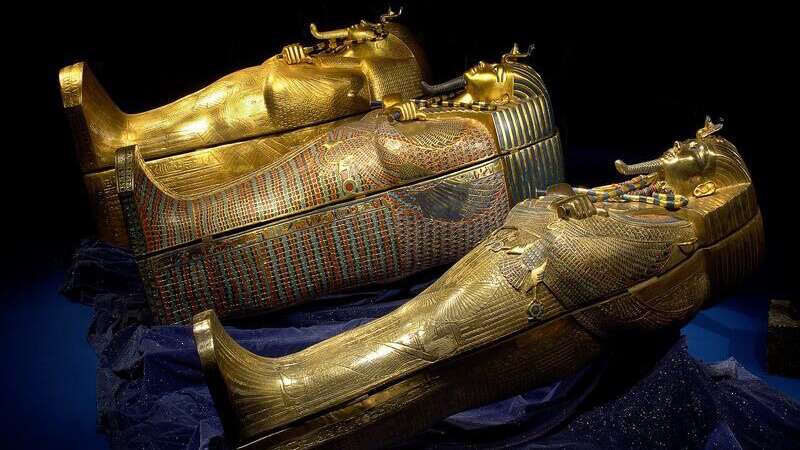
In conclusion, thieves broke into this tomb, removed the small, precious objects they desired, and then left the bulky samples alone since it would have been too difficult to steal them. The king’s mummified body was discovered inside a solid gold coffin. Inside the casket was another wooden coffin coated with gold and inlaid with colored glass; these were the only two tombs found in the tomb. The casket usually contains the king’s mummified body. When it was discovered that the graves had been resting on a wooden bed inside another stone coffin, an uproar was found worldwide.


The Tomb of King Tutankhamun

Tutankhamun

Tutankhamun was mummified because, according to Egyptian religious custom, it was expected that a king’s body should be saved and cared for after death. Embalmers removed its organs and wrapped them in cloths soaked in resin before placing his body in three golden coffins, a granite sarcophagus, and four gilded wooden shrines. The largest shrines only about fit inside the tomb’s burial chamber. As a result of the anticipated character of King Tutankhamun’s death, his successor, Pharaoh Ay, is noticed to have been in a hurry to bury him, as shown by the fact that his tomb was very modest. Up to five thousand artifacts are stuffed into the tomb’s antechambers, and these statues include furniture, chariots, clothing, weaponry, and 130 walking sticks that belonged to the lame monarch.

It would appear that the entrance passage was ransacked not long after the body was buried, but the apartments further inside were left in their original state. Tutankhamun successfully preserved Amun during his empire, but future pharaohs excluded his achievements because his father had acquired religious instability throughout his rule. Within a few generations, the entrance to the tomb was closed with stones, the region around the tomb was built up with workers’ cottages, and the grave was forgotten about.


Who was King Tut Wife?

Ankhesenamun is a mysterious figure about whom little information is available. Her name means “she lives via Amun” or “Living through Amun,” and it describes her beautifully. In her younger years, she was known by the nickname Ankhesenpaaten, which translates to “she lives through the Aten” or “living via the Aten.” The change in her devotion activities from satisfying one goddess to serving another led to a transformation of her personality and the creation of a new name.

Throughout their religious history, God Aten, who was first “known as the Sun-Disc,” was ultimately succeeded as the central deity of their religion by God Amun, who was initially “known as the hidden one.” Because she married Tutankhamun at the young age of twelve, many historians think that she was Tutankhamun’s half-sister, and King Tut, who was likely just eight years old at the time, wed her. This historical period has been assigned the name “Amarna Period” to describe it.


How did Tutankhamun die?

This mystery is because King Tut died at a young age, at 19. As a result of the condition that had weakened the bones in his clubbed left foot, he was tall and physically feeble despite his height. This specific pharaoh is the only one reflected in art sitting and the only one whose hobbies, such as archery, are shown in the artwork. There is also the possibility that the long habit of inbreeding inside Egypt’s royal succession contributed to the untimely passing of the young monarch. According to DNA research conducted in 2010, King Tutankhamun’s half-sister Ankhesenamun was his wife. This meant that King Tut was the nephew of his father’s parents, and they were left with nothing but the bodies of their two stillborn daughters.

Tutankhamun

King Tutankhamun Treasury

In 1922, the British archaeologist Howard Carter and Lord Carnarvon met with other people to open the closed door of the burial chamber in the tomb of the Egyptian pharaoh Tutankhamun. This took place in the Valley of the Kings. “The door was shut before us, but as soon as we opened it, it seemed as if we had folded centuries and returned to stand in the presence of a king who ruled the country 3,000 years ago,” Howard Carter said, according to The Wonderful Courses Daily. “As soon as we opened the tomb, we saw wondrous riches, and we couldn’t believe our good fortune in discovering what is now known to be the only tomb of Pharaoh that has remained intact for thousands of years,” Carter adds.d

After opening the tomb and making the discovery of King Tutankhamun’s mask, Carter noted in his memoirs, “The appointment was with the penultimate chapter.” And Carter relates the following story: “The mummy wrapped with great accuracy of the young king, and a golden mask with a sad face, but covered with a still dignity, the mask carried a divine aura, but the resemblance leads to his being Tutankhamun, with the purity and beauty of his face, and with the same details that we find in his pictures on statues and coffins.” Carter discovered more than 5,000 artifacts when he entered the small tomb, which was stacked very tightly. And utensils are made of various materials, vehicles, weapons, and more.


Famous artifacts found in the tomb of the king:

1- The Golden mask Of King Tutankhamun:

Tutankhamun

It was put right on the head of Tutankhamun’s mummy, with other trappings like a vertical line of golden inscriptions and four horizontal ones. The golden figure of the Ba bird was also put on the mummy’s chest, along with a large scarab amulet called the heart amulet, which had Chapter 30B of the Book of the Dead written on the other side to protect the heart of the dead person. The mask is made of pure gold and shows the features of the king’s face. It weighs about 10.23 kilograms. Tutankhamun wears the striped Nemes headdress, which signifies his relationship with the god Ra. People thought that Ra’s body was made of gold and that his hair was made of lapis lazuli.

The king or queen is shown with a large collar (called “weeks”) that has semiprecious stones like lapis lazuli (dark blue), carnelian (red), and turquoise (green) set into it (light blue). On either side of the wide collar is a picture of the falcon god (Horus). Wadjet, the goddess of snakes, and Nekhbet, the goddess of vultures, are beautifully shown on his forehead in statues of solid gold and set with precious and semiprecious stones.

The details of the king’s face show how young he looks. Some authorities believe that his expression, which looks like calm resignation and lack of interest, shows that he is sure to win even in death. For the whites of the eyes, opaque quartz is used, and obsidian is used for the pupils. The effect of Amarna art can be seen in the way earlobes are pierced. As a sign of belonging to the god Re, there is also a fake beard made of lapis lazuli with an upturned chin.

Spell number 151B in the Book of the Dead is written on the back of the mask in hieroglyphics. Each part of the face in this spell is linked to a god or other religious figure, giving the person the most safety and security possible.

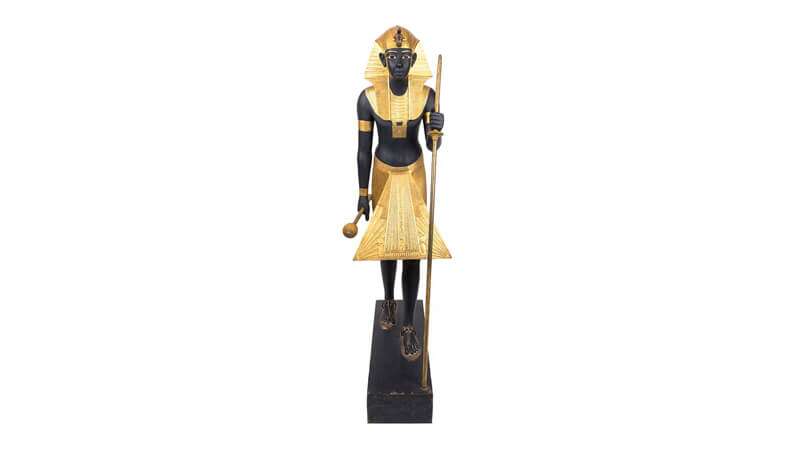
2- Wooden Guardian Statue of the King:

Tutankhamun

One of the two soldiers that Howard Carter found to protect the entry to Tutankhamun’s burial chamber was a life-sized statue of Tutankhamun. The figure featured piercing golden eyes, gold clothing, and a black ski.n

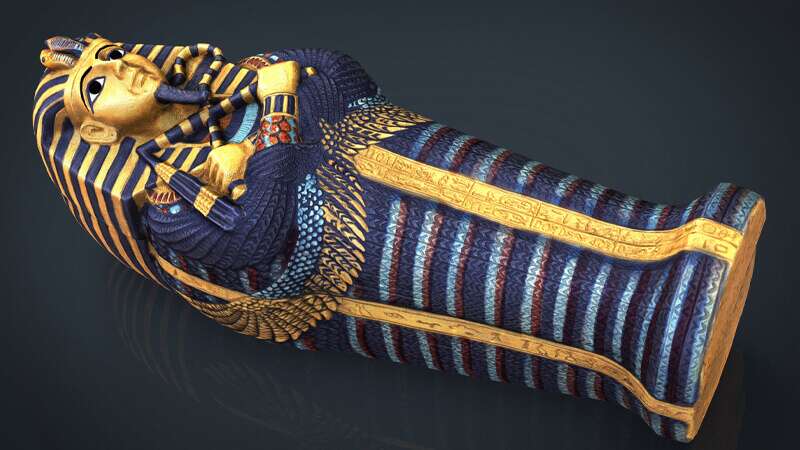
3- Miniature Canopic Coffin:

Tutankhamun

The Ancient Egyptians placed a focus on afterlife beliefs and practices. They believed that the dead person’s soul would continue to grow in the hereafter in the public interest if the body of the deceased was protected after death by the mummification process. During the mummification process, the internal organs were removed, bandaged in linen, and kept in containers called canopic vessels. The organs were kept in jars most of the time, but on occasion, they were placed in little gold coffins—this beautiful coffin stored King Tut’s contents, including his liver.

4- Royal Chariot of King Tut:

Tutankhamun

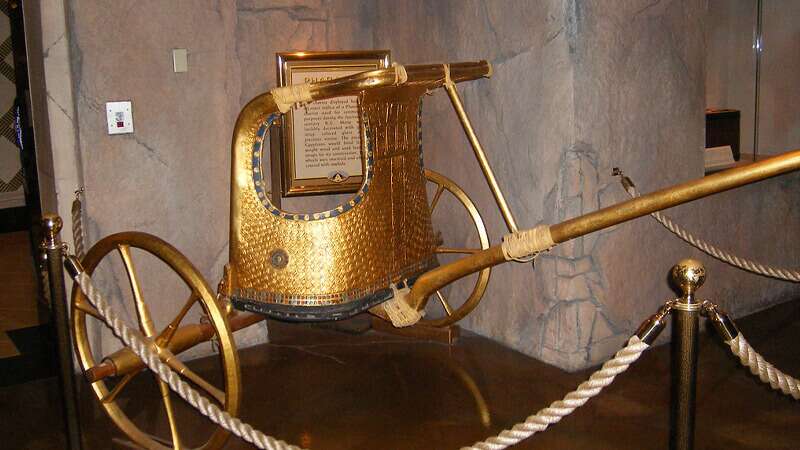
The essential components of a chariot were a simple, semicircular, open-backed frame made of wood, equipped with an impeller and a set of wheels. The shackles comprised a long pole or shaft attached to the chariot’s axle. This made two horses draw the chariot. Only 11 instances from ancient Egyptian history have been preserved to this day. Inside Tutankhamun’s tomb, we discovered a total of six chariots.

5- Tutankhamun’s Stool:

Tutankhamun

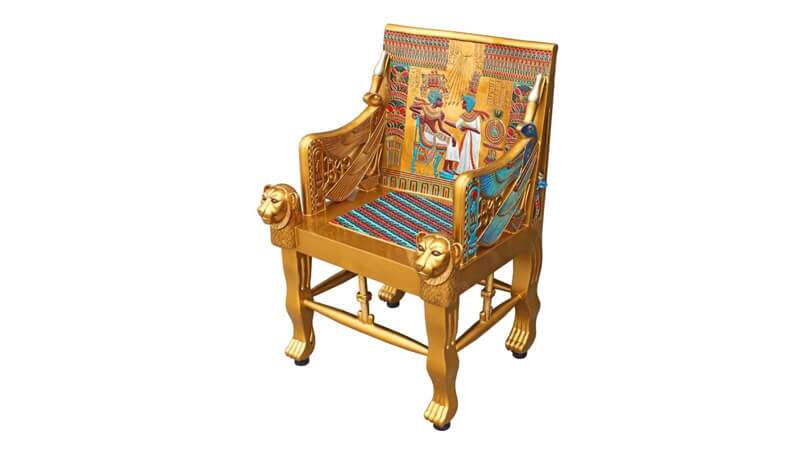
King Tutankhamun used to sit on this stool when he was a boy. The feet, shaped like a lion’s paws, are made from wood and painted white. Between them is a gilded openwork wooden design in the form of a lotus and papyrus intertwined around the hieroglyphic sign Sema-tawy, which signifies the “Union of the Two Lands.” The ornamentation is gilded and made of wood.

Don’t miss booking one of our Egypt vacation packages with Nefertiti Tours and for more discovering King Tut’s Tomb Discovering Tour.

What is the Valley of the kings?

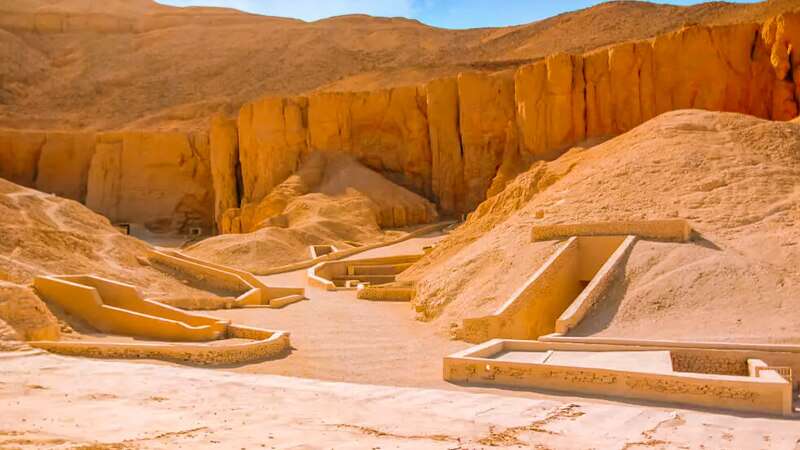
The Valley of the Kings, called Wadi el Moluk in Arabic, also known as the Valley of the Gates of the Kings, is a valley in Egypt that was the place of stone tombs that were discovered for the pharaoh’s tombs and important kings of the Kingdom over more than a period of nearly 500 years, starting in the 16th century BC and intending until the 11th century BC.

The Valley of the Kings, located in the south of Egypt, is one of the important tourist attractions that attract many tourists from inside and outside Egypt. The visit to the Valley of the Kings is intensified, especially in the winter, so that tourists and visitors can enjoy the warm climate of southern Egypt winter to discover the most valuable ancient Egyptian treasures, which date back to the era of the Pharaohs.

Where the Valley of the Kings is one of the areas that was a group of tombs of kings and queens in ancient Pharaonic times. And those who believe that they are immortal on earth will return to life and their Kingdom again after their first departure from life. Which gave them the desire to bury them in their valley and keep their treasures and wealth inside their grave, a king or a queen.


Where is the valley of the kings?

the Valley of the Kings

The Valley of the Kings is located in Egypt, specifically in Luxor on the western bank of the Nile behind Mount Taiba. It is also the main pharaoh’s tombs of the New Kingdom, who ruled Egypt between 1539-1075 BC. Of the kings of the family 18-20. At the same time, the valley is divided into two parts, the eastern valley, and the western valley. The Valley of the Kings also became a land for the royal burial of pharaohs.


Valley of the king’s facts

the valley of the kings

The location of the Valley of the Kings has been carefully selected. In addition to this, the fact that it is located directly on the western side of the Nile is really important. As a result of the fact that the sun god was believed to have “died” on the horizon of the west and then “reborn” on the eastern horizon, the horizon of the west eventually came to be associated with morbid themes. For this reason, ancient Egyptian tombs were almost always located on the western bank of the Nile.

Under the protection of a pyramid-shaped peak that grew out of the cliffs that influenced the valley, the strong kings of the New Kingdom were laid to rest. Even down to the specific valley where the royal tombs were unearthed, nothing about the choice of those locations was left to chance. The pyramid represented rebirth and, by extension, everlasting life; hence, the presence of a natural pyramid was viewed as evidence of the existence of a divine being. This area, as well as the mountain itself, was considered holy for the funeral aspect of the goddess Hathor, also called the “Mistress of the West.”, All royal tombs in the Valley of the Kings in Luxor are 100% carved from rock.

The royal tombs contain more than 2,100 pharaonic inscriptions on the walls. Tomb No. 9 of King Ramses V and King Ramses VI contains 100 pharaonic inscriptions. It was also built in 278 BC.
Most of the royal tombs are of small spaces, consisting of a single burial chamber that can be accessed through a staircase that leads down to a passageway, through a well dug underground, or a group of complex passages, eventually reaching the burial chamber of the king’s sarcophagus.


The Processes of Discovery and Exploration valley of the kings

The discovery of ancient tombs in the Valley of the Kings is not an unusual thing. In reality, of course, even in the investigation of the King Tut Ankh Amon Tomb, a significant number of 62 famous tombs had already been found. Many of these were small tombs, which included nothing more than a single hole in the earth, but the larger ones revealed about one hundred more underground rooms.

In 1799, the academics who were part of the French expedition, especially Dominique Vivant, made accurate maps of all the tombs that had been discovered up to that point. At the same time, the western valley of the Kings was found for the very first time. Cemetery 22), the scholars of the French campaign also produced two complete volumes describing the city of Thebes and the surrounding area within their historiographic work Describing Egypt, which they brought out in a total of twenty-four books describing the history of Egypt and what their eyes fell upon from various aspects of life in the country and during the time that they chose to stay in it. Cemetery 22) is the place of a cemetery that was discovered during the French campaign.

the Valley of the Kings

Unfortunately for “modern” archaeologists, many of these rooms and tombs were discovered to have been pillaged by ancient adventurers. Thankfully, the internal treasure that was found there was the artwork of ancient Egyptians; those murals allowed specialists to get a glimpse into the lives of the Pharaohs and other important figures who were buried there.

Within the schema of the Amarna Royal Tombs Project (ARTP), an archaeological expedition created in late 1990 there is currently excavation activity today. Primitive equipment was used to make some of the first tomb discoveries many years ago, and the places of these tombs were only completely moved at the time.

The current archaeological efforts are making use of cutting-edge technology in their quest to discover new information at ancient tomb sites as well as in places of The Valley of the Kings that have not before been explored.


How many kings are buried in the Valley of the Kings?

The Valley of the Kings contains 63 tombs and chambers, varying in size and purpose, from a simple pit to a complex tomb with more than 120 chambers.


How was the Valley of the Kings built?

As can be shown from the kingdoms discovered in several tombs in the Valley of the Kings, it was customary to carry out a ritual rite before beginning the work. This ceremony consisted of setting offerings and various work equipment in specific holes.

After the area where the tomb was going to be completed had been cleared of any rubbish, the stonemasons got to try and create the building. The tombs were excavated from the ductile limestone that was found in the mountains of the valley. The quality of the limestone varied greatly from region to area. In reality, the gaps in the stones usually required an improvement to the previous design, and it was not always possible to get rid of the rocks.

In these files, the shipping and immediately following recovery of each piece of equipment were carefully recorded in place to prevent armholes from developing. Because the wedges could be removed without much effort, they were usually recovered from being changed.

Baskets were used to recover the material from the tomb as the ancient Romans chipped away at the stone blocks.

After the work on the first passage had been completed, the employees who whitewashed the walls prepared them to be personalized once the next section had been finished. If the stone was of good quality, only a thin covering of plaster was required, but if it was of a lower rate, the walls had to be balanced, and the cracks had to be filled in.


What is the Valley of the Kings famous for?

The discovery of TuTutankhamun’somb established a shock and increased the profile of Ancient Egypt among modern tourists and academics. Because while his tomb had been robbed at least twice previous to its discovery by Howard Carter in 1922, these robberies likely took place not too long after the ph pharaoh’s urial because of the items, some of which were taken (including oils and perfumes that would have quickly spoiled) and the evidence that the tomb had been regained.

Because its entrance was buried under debris and chips of stone excavated during the construction of other tombs (in particular KV 9, the burial of Rameses VI) and washed there during the infrequent floods that occasionally swept the area, the tomb was probably protected from further attacks because of this. During the Rameside period, it appears that workers’ allowances were erected on top of the position of the entrance, which suggests that the Egyptians even were unaware that there was a tomb beneath them.

The Tomb of Tutankhamun, discovered by Howard Carter on November 4, 1922, is, without a measure, the most well-known tomb in the Valley of the Kings. Tutankhamun was Ak Akhenaten’s son-in-law and passed away when he was probably 18 or 19 years old (the exact cause of his death is unknown).

valley of the kings

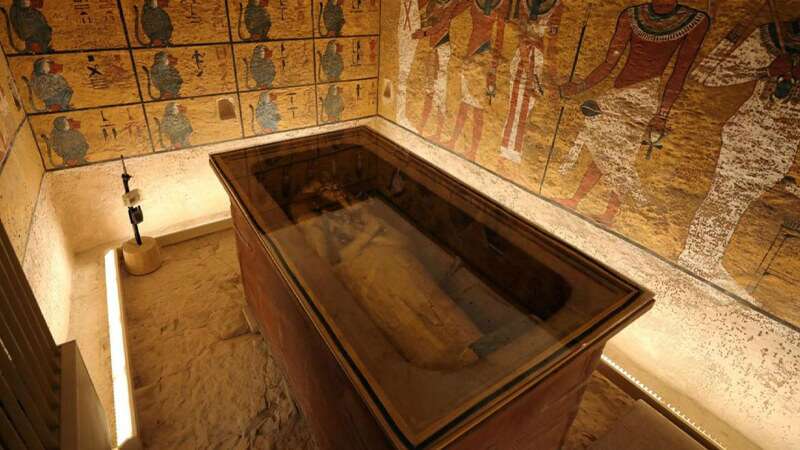
On the east side of the tomb is a doorway that can be reached by descending 16 steps. The entrance leads into a short passage that is around 7.5 meters in length. At the far end of the corridor, another door provides access to an antechamber, the largest chamber in the tomb, and was discovered to be crammed to the brim with multiple types of burial goods. There is a side chamber found in the southwest corner (to the far left). Two wooden statues of the pharaoh, each around the size of a people, were discovered close to the north wall. The yellowish crystalline sandstone sarcophagus may be found in the exact center of the room. The sides of it are adorned with religious scenes and lyrics, and at the corners, there are four relief statues of goddesses with their wings spread out in a protective posture. The pharaoh’s mummy was protected within the casket in one of three elaborately carved and adorned wooden coffins.

A little storage may be seen on the east side of the tomb chamber. On the walls of the room are painted scenes, which were hastily executed, showing Pharaoh Ay, TuTutankhamun’successor, performing the “o” ending of the mouth” “ceremony on the mummy and Tutankhamun making offerings to various gods. Both events occurred during the “o” ending of the mouth” “ceremony.

n addition, a radar scan that was carried out close to the tomb of King Tutankhamun in the Valley of the Kings in Egypt uncovered evidence that points to the presence of additional rooms buried beneath the walls of the tomb. A contentious hypothesis has been brought back to life: the burial site of the young king really conceals a larger tomb, which may be the resting place of the enigmatic Egyptian Queen Nefertiti.

Some other tombs are found in Valley of the Kings such as:

  • Toya and Yoya
  • TOMB OF RAMSES VII (1)
  • TOMB OF RAMSES IV (2)
  • TOMB OF RAMSES IX (6)
  • TOMB OF MERNEPTAH (8)
  • TOMB OF RAMSES VI (9)
  • TOMB OF RAMSES III (KV 11)
  • TOMB OF RAMSES I (16)
  • TOMB OF SETI I (17)
  • TOMB OF TUTHMOSIS III (34)
  • TOMB OF AMENOPHIS II (35)
  • TOMB OF HOREMHEB (KV 57)