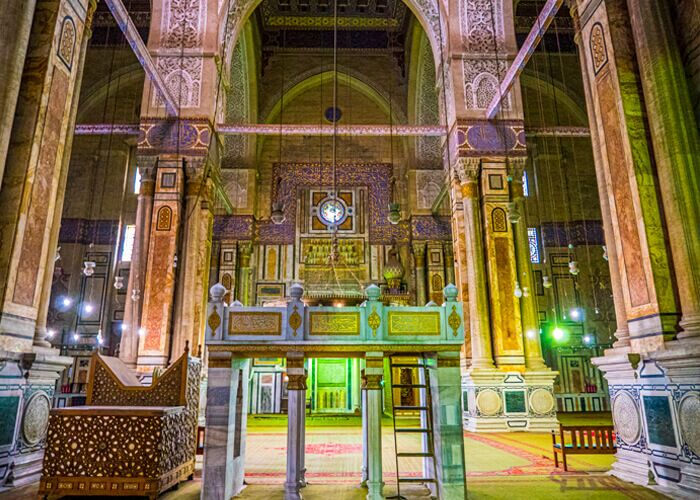
The Al Rifai mosque in Cairo is a must-see.

Old Cairo’s oldest plaza, the Citadel of Saladin, and a historic mosque are all within a few blocks of each other, making this a popular spot for tourists.

They compliment one other since they are placed right adjacent to the Sultan Hassan Mosque, which is also old and ancient..

Directions:

In Old Cairo, around 30 minutes from the city centre, you’ll discover the Al Rifai and Sultan Hassan mosques in the same general vicinity, just in front of the Citadel.

History:

In spite of their immense size, the two mosques stand out for their majestic beauty. They are massive without being imposing.

Among the best examples of this architecture is the Rifai Mosque, which was built between 1869 and 1912 for the mother of Khedive Ismail, Princess Khushyar.

You must enter from the side facing Sultan Hassan since the royal entrance has been closed.

During Gumad el-Tani, you may see Shiekh Ali al-tomb Rifai in a sandalwood cage just in front of you. Ali al-Rifai founded the Rifai tariqa for dervishes, and his grave is just ahead.

There are mashrabiya screened tombs for King Fouad and his mother, as well as the last Shah of Iran and Egypt’s King Farouk, to the left of the mausoleum.

Despite the stunning sanctuary (on the left), which has 44 columns, 19 types of marble, and 18 window grilles, it lacks the same impact as the mosques of Ibn Tulun and Sultan Hassan, whose designs harness the power of simplicity.

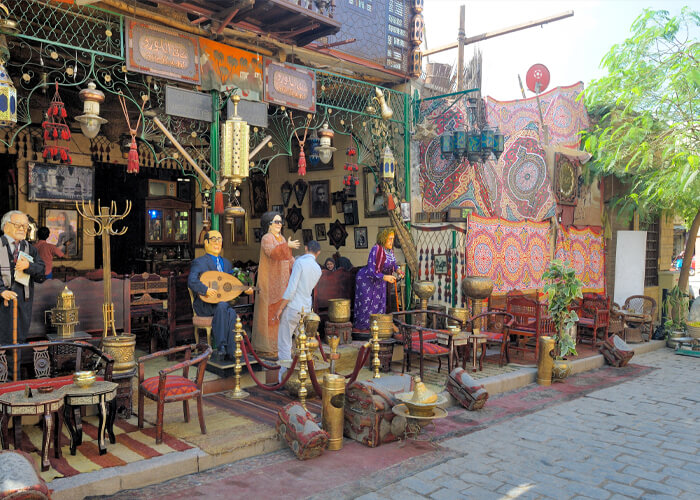
This may be seen at Cairo’s Al Muizz Street, where a wide variety of shops and restaurants can be found.

Essam Azzam street is known in ancient Arabic as ‘Sharia al-Muizz li-Deen Illah’ and is around one kilometre in length.

One kilometre long, it is one of Cairo’s oldest streets and one of the city’s most historic.

Since it possesses the biggest concentration of mediaeval architectural assets in the Islamic world, it is the most popular tourist destination in the globe.

Location:

It is situated in the heart of Cairo’s Old Islamic Cairo area, about 30 minutes from downtown, and is one of Egypt’s most prominent historical sites for individuals who are interested in the development of Islam.

History:

Al Muizz links to Bab Zuweila in the southern portion of the city, which is located in the northern section of the city.

At 8 a.m. on April 24, 2008, Al-Muizz Street became a pedestrian-only zone, creating what is currently referred to as a “open-air museum.” On April 24, 2008, the order was issued.
Al Muizz Street crosses the Muski around 200 metres west of the Midan El-Hussein mosque, where two mosques are located.

While still within walking distance of the Goldsmith’s Bazaar, this stretch of the street is affectionately referred to as “Al-Nahaseen,” the Coppersmith’s Bazaar, because of the large number of shops selling copper post-basin-finials with crescent tops.

Due to the fact that this Bazaar used to be a broad boulevard that terminated in a vast parade field between two caliphal palaces, locals affectionately refer to it as Bayn al Qasrayn (Between the Two Palaces), even though there are no longer any traces of the palaces.

As a nod to its historical importance, the street was recently given the title of the first book of Naguib Mahfouz’s Cairo Trilogy, which is generally translated as “Palace walk.”

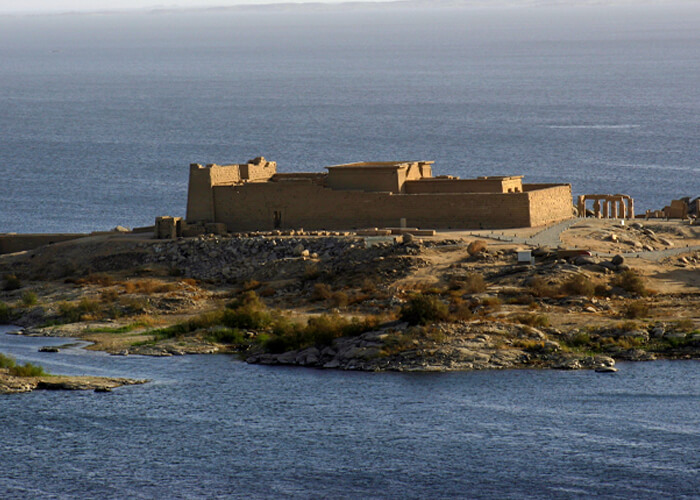
Kalabsha is a temple in the vicinity of Aswan.

This discovery was made after relocating the Temple of Kalabsha to avert flooding.

Location:

It is located in the vicinity of Aswan and the High Dam on Lake Nasser, and is easily accessible by road and by Lake Nasser Cruise Boats.

History:

Kalabsha Temple, situated at the western end of Lake Nasser near the western end of the High Dam, is either marooned on an island or extended out on a peninsula depending on the water level.

Between the spot and the dam, there’s a boat graveyard and other fishy remains that contribute to the melancholy.

Originally from Talmis (after known as Kalabsha), 50 kilometres south of Aswan, the main Temple was deconstructed into 13,000 stones and reassembled here in 1970 as part of the Great Sphinx Project.

Mandulis’ temple, which has no connection to the two other nearby structures, has been referred to as Kalabsha, which is the name of its original location rather than the temple itself.

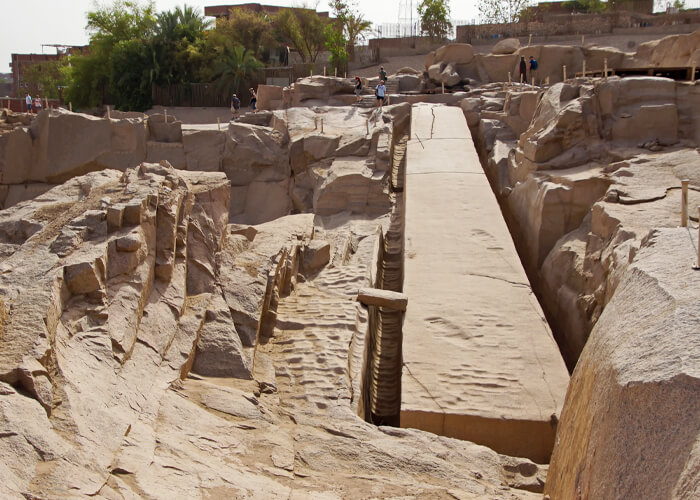
This project has not yet been completed: the Obelisk of Aswan.

As a wayfinding tool, the Ancient Egyptian Obelisks were very significant since they stood at the entrances of temples, generally in pairs.

For the most part, they used red granite, which was quarried from the granite rock near the Nile and then sent to their ultimate destinations in Cairo and Alexandria by ship.

Directions:

Located only 7 minutes from the city centre of Aswan and 3 hours from Luxor, the hotel is at an ideal location.

History:

It was cut from the bedrock and abandoned after discovering a flaw in the stone.

If it had been finished, the obelisk would have weighed 1168 tonnes and stood 42 metres high.

The so-called Lateran Obelisk in Rome, which once stood in front of Tuthmosis III’s temple at Karnak and is today recognised as the largest obelisk in the world, is thought by some academics to be a companion piece to this one.

For example, the use of wooden wedges to split fissures and the abradant usage of quartz sand slurry have been documented by researchers via the use of chisel marks and abandoned quarrying equipment.

Quarry workers painted dolphins and ostriches on the walls of the quarries hundreds of years ago, so visitors may see them as they make their way through the mines.

Facts worth noting:

In fact, there are more Obelisks in existence now than there were when they left Egypt because of the purchasing by various governments and shipment to other countries.

Rome, Paris, London, Istanbul, Israel and New York City are just a few of the major cities where they have been displayed prominently in addition to countless more that remain in place at temples and other spots around the nation (8 in total left in Egypt).

Egypt is home to the Aswan High Dam.

Egypt is a land of marvels and culture, as well as a place with a long and interesting history.

Although the Pyramids of Giza, the Nightingale Sphinx, and other ancient Egyptian wonders are well recognised, one of the lesser-known and more modern Egyptian successes is the Aswan High Dam, an architectural marvel that provides Egypt with both drinking water and energy.

On this page, we’ll take a look at the Aswan Dam’s significance as a symbol of political fennec and the desire to take control of one’s own fate, and how the dam has affected its surrounding environment.

There are many reasons why the Aswan High Dam is important, and this section will help you understand why.

The Aswan Dam’s placement on the Nile is as follows:

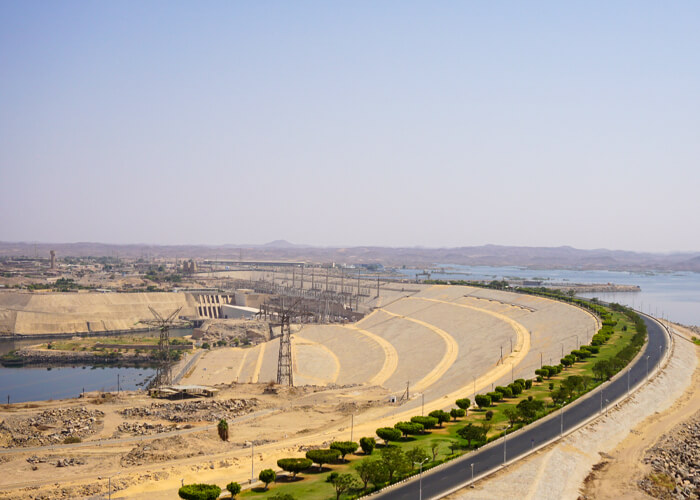
Located in the city of Aswan, the Aswan high dam is the world’s biggest earthen dam, and it has played an important part in Egypt’s history.

The dam is regarded a technological and scientific wonder due to its 111-meter height, 3,830-meter length, and 980-meter base width, as well as its yearly flow rate of roughly 10,042 Gifawhatt. A true technological and scientific wonder, it includes 43 million cubic metres of building materials.

The history of the Aswan High Dam:

Ibn Al-Haytham, a prominent Arab polymath and engineer of the 11th century, was the first to attempt to build a dam in the Aswan area.

The Fatimid Caliph, Al-Hakim bi-Amr Allah, had asked him to come up with a solution to the Nile flooding situation, and as a result, Al-Hakim was killed.

A test in the actual world demonstrated the notion to be impracticable. Examples of temples include:

Since the first attempt to construct a dam across the Nile began in 1898 and continued until 1902, the second attempt to build the Aswan Dam would be a British undertaking.

A dam across the Nile was initially attempted in 1898 and lasted until 1902.

Sir Wiliam Wilcocks was in charge of the dam, then known as the “Aswan Low Dam.”

Adrian Daninios, a half-Greek, half-Egyptian engineer who was born in Greece and reared in Egypt, came up with the concept for a New Aswan dam between 1954 and 1959.

Harold Edwin Hurst’s alternate idea instead of the Farouk administration’s recommendations were accepted.

The low evaporation rates in Sudan and Ethiopia necessitate the storage of water in those nations.


A short-lived effort was made by Gamal Abdel Nasser Daninios of the Officer movement, but the technique he devised proved to be effective.

Because of worries about the rise of Russian dominance in the area, both the United States and the United Kingdom pledged to help to the funding of the Dam.

Due to his self-identification as a neutralist and natural leader, this led in a loan of 270 million dollars in return for Nasser directing the Arab-Israeli conflict, which culminated in the granting of the loan.

Using a power play, Nasser demanded that the United States send weapons that were conditioned to be used in defence only.

After Russia pledged to send the armament, Nasser was able to secure 56 and 14 million dollars from Britain and the United Kingdom, respectively, following the request.

A sequence of political events and frictions between Egypt, the United States, and the Soviet Union (modern-day Russia), as well as fears about the Abu Simbel temple being submerged, led to the Soviet Union continuing to give financial and other help for the Dam.

With the help of the Soviet Hydro project Institute and 25,000 Egyptian engineers, construction on the Aswan high dam got underway in 1960.

The dam was finished in 1972. The reservoir’s full capacity was attained the next year when the dam was finished in 1976.

There can be no doubt about the significance of the Aswan High Dam.

What is it about the Aswan Dam that makes it such a remarkable structure? The following are some of the most persuasive reasons in favour of this position:

Before the building of the Aswan Dam to manage the flooding of the Nile, although the flooding resulted in enriched, fertile soil, it could also result in the loss of entire harvests and prolonged droughts in particular locations.

The notion of a totally controlled flood looked unimaginable even with the current dam in place until the building of the Aswan High Dam.

A dearth of rainfall forces Egypt’s farmers to rely significantly on irrigation.

The annual release of 55 cubic kilometres of water from the dam is critical for many villages along the Nile, particularly those in the Delta.

Since its construction, the Aswan Dam has protected Egypt from a number of devastating droughts, notably those that struck in 1972-73 and again from 1983-87.

The ability to generate energy is a significant benefit of the Aswan High Dam.

12 generators each with a 175 megawatt capacity make up the power plant.

One of the primary factors in the introduction of the electricity to various towns for the first time was its capacity of 2.1 gigatons.

The archaeological community has also profited from the Aswan Dam, which has kept floodwaters away from more over two dozen historically significant monuments and architectural complexes.

Both good and negative effects have been attributed to the Aswan Dam.

Soil salinization and overflow flooding are two problems caused by the dam.

Another example of the dam’s negative effects is the reduction in the area’s fish catch rates.

Because of this, they do not make up the majority. Despite its flaws, life as we know it is not completely unimaginable without the Internet.